Desertcart purchases this item on your behalf and handles shipping, customs, and support to UK.
๐ง Fix it fast, fix it flawless โ the ultimate bonding breakthrough!
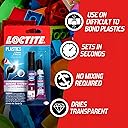
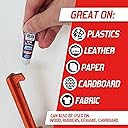
Loctite Plastics Bonding System is a two-part cyanoacrylate adhesive kit designed for rapid, invisible, and ultra-strong bonding of challenging plastics like polyethylene, polypropylene, and PTFE. Its advanced activator primes surfaces for superior adhesion, setting in seconds without clamping or mixing. Weatherproof and chemical-resistant, this clear-drying glue delivers professional-grade durability for repairs, crafts, and industrial applications.


| ASIN | B01ETX436U |
| Best Sellers Rank | #2,520 in Industrial & Scientific ( See Top 100 in Industrial & Scientific ) #42 in Cyanoacrylate Adhesives |
| Brand | Loctite |
| Brand Name | Loctite |
| Color | Clear |
| Compatible Material | Plastic |
| Container Type | Kit |
| Customer Reviews | 4.2 out of 5 stars 4,382 Reviews |
| Full Cure Time | 24 hours |
| Global Trade Identification Number | 20079340825653 |
| Included Components | Super Glue Tubes (6) |
| Item Form | Liquid |
| Item Package Quantity | 1 |
| Item Weight | 7.84 ounces |
| Manufacturer | Henkel Corporation |
| Material | Ethyl cyanoacrylate |
| Material Type | Ethyl cyanoacrylate |
| Model | 681925 |
| Number of Pieces | 1 |
| Other Special Features of the Product | Strong |
| Part Number | 681925-6 |
| Special Feature | Strong |
| Specific Uses For Product | Repair |
| Unit Count | 1.26 Fluid Ounces |
| Volume | 0.13 cubic feet |
| Water Resistance Level | Waterproof |
P**O
Works well on silicone rubber. Even tho it's not supposed to.
EDIT: Two years later and still holding strong. I recently had to pull apart some silicone rubber that I had glued to PVC. The glue bond was extremely strong, the rubber tore without the glue bond ever letting go at all. That's the most you could ask for. It also works well for metal to plastic. I keep this handy for all sorts of plastic repairs and builds. First I'll have to say that the little tube of glue that comes with this turned out to be useless, it just glued itself shut. Not a big problem as there was a large bottle of Locktite superglue handy, so I used that. The activator agent comes in a metal tube with a felt tip, similar to a magic marker or Sharpie. The fluid is clear and hard to see, but it does come out and you can smell it. I treated both surfaces to be glued, even if one wasn't plastic. After the fluid evaporates you use the superglue just like normal. I was happily gluing silicone rubber tubes to a softer silicone rubber base with no problems. Adhesion is fast and strong. Then I read that this is NOT for silicone rubber. Oh well, I don't care, it works great and is easy to use. The bond is often stronger than the silicone itself. What more could you want? There was plenty of the activator for my use, in fact I have some left over.
W**E
Amazingly work!
Really work on polyethylene bonding to each other and metal.
V**R
Put this in your toolbox.
It's hard to find glue that will work on every plastic, and this one doesn't. BUT, it works on most of the plastics I have tried, including ABS. I did have a problem with PVC, but I guess that is why they make PVC cement. For most plastics, this product works for medium duty applications.
S**E
Use this for hard plastic surfaces--it seems to bond very well.
Comes with a little sharpie-like primer that you just glide along both edges, and the tube of glue itself, to be applied to only one edge. BE SURE TO USE PROTECTIVE GLOVES. I used ordinary, very thin vinyl ones available for cheap on Amazon. The glue won't hurt you, it's just that it's very difficult not to get it on your hands, dries immediately, and takes at least 24 hours to get it all off if you keep picking at it. Better to get the gloves and avoid that problem. I used it to glue together two panels at the bottom of my car driver's seat: the power seat-control panel on the side, and the adjoining one on the bottom front. I glued two little pegs inserted into holes, plus the seam where the panel meets the front panel. I had to do this because the rear panel at the back of the seat is missing, which normally holds everything in place, so the entire assembly was hanging down. Now it seems to be holding pretty solidly. I glued them together about three weeks ago. I'll give an update in if and when it ever comes apart again.
L**T
Ineffective
)Save your money - does not work, at least not reliably. I tried to use it to repair a broken watch band loop. It's made of a thick rubbery plastic that seemed like the ideal application for this glue. The break was fresh, the rubber was clean, directions were followed, and the result was a bond that failed within 24 hours. Perhaps there is something about the material these watch bands are made of that makes them incompatible with this glue, but the list of things it's supposed to work on would give you he impression that shouldn't be the case. In any event, unless your a trained chemist specializing in synthetics, you're likely not going to know one plastic from another and which glues are compatible with which plastics. Also, as many users noted, consider this a single-use product, possibly two times if you're lucky. While there is plenty of glue for multiple repairs, the nozzle seals itself once exposed to air in spite of the cap being securely attached. At that point, you can get one more application (assuming you think you have something this will work on) by puncturing the metal tube with a needle or push pin. I had enough of the 'primer' for at least two repairs had I elected to try to use it again, but I don't know how much more beyond that. Even though you can't return this (hazardous material handling required), Amazon made good with a refund anyway, so kudos to them for continuing to maintain a relatively high bar for customer service. Addendum: One thing I forgot to mention is that Amazon carries replacement strap loops - they run around eight or nine dollars. Pretty expensive for no more than they are, but still cheaper than a whole new band. In lieu of that, after the glue failed, I went with a 79-cent o-ring from my local Ace. It may not last as long as the original or replacement band loops, but they're easy to put on and I can several for the $8 it would cost for a replacement loop, not to mention the cost of a new band.
O**Y
Surprise, it worked.
I bought this to repair a weighted action lever of a synthesizer keyboard key that had broken. It was made of nylon, and nylon does not glue. The repair was a polished steel weight that had been overmolded with nylon and had broken where the two materials came together. I used this bonder by coating both parts with the activator then applying the bonding adhesive , clamped them gently, and left them overnight. Next morning, good as new. These weighted action parts are both expensive and unobtainium at this time, so my musician friend was ecstatic. Time will tell how long this will last in usage so we put this part up in the highest note on the keyboard under the assumption it would get infrequent use giving it the opportunity to last the rest of the life of the instrument. If I owned this myself, I would have left it mid keybed where it will get hammered all the time just to see how durable it really was. Time will tell. But the product did exactly what it claims and I am glad to be adding this product to my "glue" collection.
M**Y
Loctite Plastic's Bonder: Heptane + SuperGlue = OK solution
This Locate Plastic bonder system is basically just superglue, with a "step one" primer of Heptane. Superglue on its own doesn't "stick" well (adhere) to a lot of plastics, even though its strong stuff. The solution is to "prime" the plastic with something that allows the superglue to get a better grip. That is what Loctite plastic bonder system is. Step 1 (the primer), is a "Heptane" liquid/gas "pen". You pop the cap, and then draw (like a felt tipped marker) on the plastic on the bond points. The liquid heptane in the catridge wicks down the felt tip, onto the plastic, and it dissolves "into" the plastic. On a brand new Step 1 cartridge, you can see a slight color adjustment as the liquid Heptane coats the plastic. That disappears nearly immediately (in less than 1 second) as heptane turns gaseous and evaporates nearly instantly at room temperature. Part 2 is just cynoacrylate (superglue). You can get superglue much cheaper just about everywhere when compared to Loctite Plastic's Bonder System. So what you are really paying for here is the Heptane pen. When you use the pen, IMMEDIATELY put the pen top back on when done. The Heptane is VERY volatile and evaporates quickly and easily. You are burning money ever second you have the top off the pen. Your use should be get ready eyeball your pen approaches to the plastic surfaces, be 100% prepared, pull of the pen-top, draw onto each area to be bonded, and then immediately replace the pen-cap again. Then wait for 30-60 seconds (the time it takes for all the Heptane to evaporate), and then use the Step 2 plastics bonder. If you run out of Step 2 (rare, but does happen if you follow my recommendations to Preserve your Primary pens as long as possible), then you can just use a regular bit of SuperGlue in place of the Step 2 tube, because that all that is in there anyway. Some plastics are more dependent on good priming for a good glue seal with high adhesion. Others need it less (more porous plastics are less dependent). Some plastics cannot be bonded with Superglue at all, even with priming. This glue, when it works (which is most of the time if used properly) is the "neatest" solution, with the least amount of over-glue leaking out of the glue joint. And if you are quick with a paper towel (on hand before you start), you can even clean up over-glue leaks. Holding is OK, but varies with the success of the Step 1 primer heptane. That Heptane basically dissolves mirco-holes into the plastic for the Step2 superglue to adhere to. For finer work, or to get pieces into a "locked" in place, I used this glue on plastic. Then, on plastic on which I can put plenty of overglue (e.g. places were the esthetics do not matter), I use instead an Epoxy type (or Urethane type) glue to bond instead. Urethans are usually "runnier" and thinner (good for car bumpers), and Epoxy's are a bit thicker (but often stronger and set faster). I use those after the piece has been secured with the Loctite Step1 + Step2 bonder (e.g. primer + superglue). That makes the plastic indestructably strong (epoxy), or much tougher (Urethane) then the Loctite by itself. But if you need to bond plastic and the esthetics do matter, then this Loctite primer + glue is a good solution.
G**S
It will glue your skin too
Held great
T**I
best thing to joint thermoplastic like polypropylene
My cooler plastic part is broken , no glue is working because of soft plastic propery , after searching i got to onow about this loctite glue , which joint polypropylene and it works. after joining cooler broken part , i start my cooler again. This is the best thing i have got because this is not available in local shops. The activator is dry there is no liquid inside activator glue only some cotton whic has little liquid left that i used after cutting activator glue. only bonder glue is in liqiud form that i use and it work. So it is very usefull to worl on thermoplastic.
K**V
Used for attaching Teflon to curling shoe
I used this glue with primer to attach a Teflon slider on a rubber soled curling shoe. Been using it for two months and so far so good. Very difficult problem to solve as Teflon is very slippery and nonporous.
Trustpilot
1 month ago
2 weeks ago