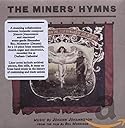
The Miners' Hymns
Product ID: 53709345
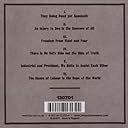
Product Description Jshann Jshannsons FatCat debut is the haunting product of a collaboration between the Icelandic composer and acclaimed American avant-garde filmmaker Bill Morrison. THE MINERS HYMNS is the score for Morrison's film of the same name. Review In his book, London Under, Peter Ackroyd notes that the world beneath our feet can "move the imagination to awe and to horror". But, equally, it’s a locus for prodigious triumph and catastrophic ruin, as this collaboration between Icelandic composer Jóhann Jóhannsson and American filmmaker Bill Morrison unequivocally shows.Taking the ill-fated mining community of Durham in northeast England as their subject, the pair has crafted a brooding, dark tribute focused on the appalling hardships of pit labour and the undeniable salience of the trade union movement in times of political cataclysm. Morrison deploys archival footage of the 1984 strike and the attendant running pitch battles with police alongside more genteel moments – charting the remarkable escalation of the prosaic towards the historic. Yet, despite the miner’s defiance, the eventual death knell of the industry had been sounded by Margaret Thatcher’s Conservative government and the flow of a community’s economic lifeblood had been staunched. In this light, The Miners’ Hymns becomes something of a fighters’ lament.As Morrison’s arresting imagery filters through, the only sounds heard are those provided by Jóhannsson’s highly emotive score. The potency of the pictures’ powerful message can only be fully comprehended by hearing their audio accompaniment. By returning to the brass arrangements of 2004’s Virðulegu Forsetar, Jóhannsson is referencing both the popularity and symbolic importance of the region’s traditional colliery bands, while evoking Elgar’s distinctive brand of Englishness. But these supremely evocative compositions also percolate in fuggy, swirling miasmas, recalling not only Ingram Marshall’s Fog Tropes, but also the catalogues of other artists forging ghostly cavernous sonorities below the Earth’s crust, such as Pauline Oliveros with her deep listening cistern operations and Oliver Beer’s explorations of the resonances inherent in Victorian sewers. Here dwells the belly of the pit, the occupational heart of darkness.While nowhere near as immediate as Jóhannsson’s string-based albums for the 4AD imprint – IBM 1401, A User’s Manual and the sublime Fordlândia – The Miners’ Hymns is far more complex in its use of dynamics while succeeding totally in its evocation of time, place and message. And those still seeking the attention-grabbing symphonies of before will no doubt get a suitable fix from the gloriously drilled The Cause of Labour is the Hope of the World, drawing to a rousing end this powerful testament to the plight of traditional labours and our nation’s working class. --Spencer Grady Find more music at the BBC This link will take you off in a new window
F**.
Fantastic
This is an amazing cd. Beautifully played.
P**O
Another powerful score from Johannsson
Contrary to much comment I felt that 'Fordlandia' was the weakest of Johan Johannsson's pieces to date and revealed some of his limitations - repetition without development can sometimes sound just ... repetitious. However, he has had a return to form with last year's 'And In The Endless Pause There Came The Sound Of Bees' and now with 'The Miner's Hymns'.At times dark and brooding it finally reaches an epiphany of affirmation and hope amongst despair. I have yet to see how it works with the video images but it works eminently well as a stand alone piece.
M**
Five Stars
Love it !
T**K
Good music.
Not quite what I expected. Good music.
V**N
Amazing
While I know the history is these pieces - for use in a documentary on Coal Miners - I've never seen the film itself. I came upon the music as music, without any connection to moving images. As such, I can only comment on what I hear.Personally speaking, I find this music extraordinarily moving. In fear of introducing hyperbole, I have to say the overall effect of this piece is akin to Gorecki's 3rd symphony - and that's saying a LOT. It's just incredibly emotive, incredibly wonderful and beautiful. It's mainly about tones and moods, rather than melodies or intricate interplay of musicians.I don't have many discs that can create a mood like this, it sucks you in, cradles you, and reaches into your heart. Just gorgeous. So sad the composer is no longer with us.
C**S
Sorry I like the film but as a standalone CD ???
I like the film very much and the soundtrack adds a lot (at least in places) but on CD I found the music pretty boring and monotonous.It does rise to a bit of a triumphant (and tuneful) ending but the first few tracks just drone on and on and are very minimalist in content with enormous amounts of repetition.Before you slam me it is a matter of personal taste - but I can't see my self listening to if very often.
M**S
The horror of the present
"Francis, William, 14 Apr 1853, aged 13, Driver, he had left his work to do the duty of another boy who was employed as a putter, and being unacquainted with the place, his head became jammed between the tub and the timber supporting the roof, he died instantly."I remember living in Durham, a beautiful, haunted place, and seeing a single old photograph of mineworkers walking up a cobbled street, Durham cathedral in the background, and wondering what ages the cathedral walls have seen. I remember by father pointing to a small wall in Barnsley, South Yorkshire, another now-dead centre for coal mining, saying that as a child he had seen smoke rising from behind it, looked over, and seen a row of miners sitting behind it waiting for the bus, hunkered down, out of their element in the freedom of the open sky."Bolton, James, 29 Apr 1857, (accident: 18 Apr 1857), Onsetter, he was cleaning out the cage hole when the brakesman lowered the cage on him. Signals were made to get the cage taken up, but, in his confusion, the brakesman lowered it a second time onto Bolton, who suffered severe crush injuries and died on 29 April."This music is a kind of a war requiem. War requiems are written after the war is over. What was just life for the people who have been made the subject of the music and film is a horror to us now, or so it is suggested. Horror is the inability to give order to, and see justice in, a recognisable reality, to wit: men have died for us. Men have suffered stunted, curtailed, servile lives; have suffered innumerable little deaths, for us."Taylor, John Thomas, 24 Nov 1902, aged 16, Driver, when driving, his pony crossed out and the limber end caught and displaced a prop which let down a stone upon him and killed him."The materials - Durham Cathedral's organ, the brass bands so well representing the voice of mining communities, the archive footage used in the film, the grim Britten-like themes which pervade much of the music - rise out of the subject matter, with as much authenticity as one could really hope for. They are of the period; but the feeling, the motivating cause, is all our own. The past, we have learned, is something that ought to be feared, because it cannot be trusted to stay dead.The end of the piece at last grows into an anthem, and in the film is backed by footage of the labour unions marching in festival through the door of the cathedral. It speaks of justice being reborn, and so too should it speak about our place in the present. Let it be our duty to offer our past the hand of friendship."Qui passus es pro nobis, miserere nobis."
B**N
Jóhann, please release more: Norway!
As often when i'me on your site i look to see if any new CD's from artists which i follow have released something new. As in the case of Ludovico Einaudi. Ludovico technique is diffinitly not Ludovico Einaudi! I bought the CD, "the pig in the sack" as they say in Sweden; without listeninging beforehand. This was a big mistake! A mistake i have made with you on too many earlier occasions. If there was a way to listen to CD's Before hand then i wouldn't continually be making this mistake and would be buying more CD's from you. As it is i'me out on other sites to listen beforehand, unfortunatly they often times don't have the CD'd imé interested in. Call it what you will but i call it bad costomer service.Sincerly, John Biddle
Trustpilot
1 month ago
2 days ago