
Desertcart purchases this item on your behalf and handles shipping, customs, and support to UK.
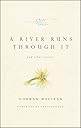
Just as Norman Maclean writes at the end of "A River Runs through It" that he is "haunted by waters," so have readers been haunted by his novella. A retired English professor who began writing fiction at the age of 70, Maclean produced what is now recognized as one of the classic American stories of the twentieth century. Originally published in 1976, A River Runs through It and Other Stories now celebrates its twenty-fifth anniversary, marked by this new edition that includes a foreword by Annie Proulx. Maclean grew up in the western Rocky Mountains in the first decades of the twentieth century. As a young man he worked many summers in logging camps and for the United States Forest Service. The two novellas and short story in this collection are based on his own experiencesโthe experiences of a young man who found that life was only a step from art in its structures and beauty. The beauty he found was in reality, and so he leaves a careful record of what it was like to work in the woods when it was still a world of horse and hand and foot, without power saws, "cats," or four-wheel drives. Populated with drunks, loggers, card sharks, and whores, and set in the small towns and surrounding trout streams and mountains of western Montana, the stories concern themselves with the complexities of fly fishing, logging, fighting forest fires, playing cribbage, and being a husband, a son, and a father. By turns raunchy, poignant, caustic, and elegiac, these are superb tales which express, in Maclean's own words, "a little of the love I have for the earth as it goes by." A first offering from a 70-year-old writer, the basis of a top-grossing movie, and the first original fiction published by the University of Chicago Press, A River Runs through It and Other Stories has sold more than a million copies. As Proulx writes in her foreword to this new edition, "In 1990 Norman Maclean died in body, but for hundreds of thousands of readers he will live as long as fish swim and books are made." Review: Haunting. - "It is those we live with and love and should know who elude us." In his requiem to a lost family idyll set beautifully in rural western Montana, Norman MacLean seeks to understand as much as he seeks to be understood. Rich with both vivid description of spectacular natural beauty and the sometimes heartbreaking tragedy of human failing, MacLean's brilliant prose inspires the reader to think deeply, to plumb the depths of his own soul, and to examine the ties that bind his closest relationships. Though there are actually three stories contained in A River Runs Through It and Other Stories, it is the title novella that makes our eyes water. One suspects it was catharsis that MacLean was after in penning at 74 this ode to the summers of his youth spent on the pristine trout rivers near Missoula, one of which was rudely and suddenly disrupted by his brother's murder. To his surpassing mastery of the English language, Maclean adds a gift for storytelling that includes a wickedly dry wit. And it is doubtless through his colossal talent as a writer infusing this marvelous story with emotion that he can move us profoundly in only 104 pages. For instance, he conveys a mystique, a sort of aura, in his lyrical descriptions of his brother Paul, as if Paul were part angler and part angel. "Below him was the multitudinous river, and, where the rock had parted it around him, big-grained vapor rose. The mini-molecules of water left in the wake of his line made momentary loops of gossamer, disappearing so rapidly in the rising big-grained vapor that they had to be retained in memory to be visualized as loops. The spray emanating from him was fine-grained still and enclosed him in a halo of himself. The halo of himself was always there and always disappearing, as if he were candlelight flickering about three inches from himself. The images of himself and his line kept disappearing into the rising vapors of the river, which continually circled to the tops of the cliffs where, after becoming a wreath in the wind, they became rays of sun." We realize that MacLean deeply admired his brother. But ultimately, he could not help him. And he, like the boys' Presbyterian minister father, almost certainly remained troubled by that fact until his death. Yet MacLean eventually came to understand why. Through his exceptional storytelling and keen insight into the human condition, we begin to understand as well. "So it is that we can seldom help anybody. Either we don't know what part to give or maybe we don't like to give any part of ourselves. Then, more often than not, the part that is needed is not wanted. And even more often, we do not have the part that is needed." Haunting. Review: Fishing reveals the meaning of life, and other stories... - Norman Maclean published his first work, this collection of three stories, when he was 73. He was an English Professor at the University of Chicago, and its Press broke precedent, by publishing its first work of fiction. A fortuitous decision, as this best seller provided the Press the funds to issue other drier academic works of non-fiction. The movie A River Runs Through It , directed by Robert Redford, issued in 1992, helped greatly to popularize this story. Nonetheless, not having seen the movie, I was leery of the book, with a gut feeling that this would be about the ultra-rich crowd who water at Jackson Hole, WY, or even further a field, say, chartering a private plane to some remote river in Siberia, so they can differentiate themselves from the masses by practices this arcane sport. And was I ever wrong - this is the REAL thing, fly-fishing as a natural art form, and a passion, as practiced by the natives of an equally obscure part of America: the Idaho-Montana border area. The story is largely autobiographical, set in the late `30's, and is about Maclean's family relationships, particularly with his brother, who we learn early in the story, was murdered in the prime of life. His father, a Presbyterian minister, of Scottish origins, taught both sons how to fly fish, and it remained a passion, and cement that could be relied upon to bind their relationship. Norman's brother was admittedly the better sportsman. Although I've never fished, this one story explains why it is an intelligent man's (or woman's) avocation, shattering the image of Tom Sawyer sitting under a tree, with a pole in the water, and a worm at the end of the string. For that reason alone, the story is worth the read (I'd also highly recommend Russell Chatham's series of short stories Dark Waters for the same reason). But what really sets this story apart is the beautifully crafted tale of these relationships, coupled with those relating to their absolute loser of a brother-in-law and the women who find self-actualization tending to his pathetic nature. There are also some ribald and humorous scenes in the story. A line in the story summarizes Maclean's outlook: "...at the time I did not know that stories of life are often more like rivers than books." And perhaps the central question of the story is: Can we really help anyone else? The other two stories don't match the title story in excellence, but still are both worthwhile reads. They are both set just after World War I, when Maclean was in his late teens, and worked in the logging camps and the Forest Service in the same Idaho-Montana border area. It is a portrait of the "rough and tumble" West, not long after the "frontier" had closed, and featured hard work, gambling, boozing, and, yes, ladies of the trade. Maclean's summer work with the Forest Service involved fire watches, and it was in this same area that the largest forest fire in American history occurred nine years earlier, and is described in Timothy Egan's excellent book The Big Burn: Teddy Roosevelt and the Fire that Saved America . Like Egan, and Wallace Stegner, Norman Maclean has written excellent, , poignant and authentic stories of the American West. A solid 5-star read.
| Best Sellers Rank | #343,365 in Books ( See Top 100 in Books ) #54 in Short Stories Anthologies #109 in Western U.S. Biographies #122 in Short Stories (Books) |
| Customer Reviews | 4.6 out of 5 stars 3,641 Reviews |
T**T
Haunting.
"It is those we live with and love and should know who elude us." In his requiem to a lost family idyll set beautifully in rural western Montana, Norman MacLean seeks to understand as much as he seeks to be understood. Rich with both vivid description of spectacular natural beauty and the sometimes heartbreaking tragedy of human failing, MacLean's brilliant prose inspires the reader to think deeply, to plumb the depths of his own soul, and to examine the ties that bind his closest relationships. Though there are actually three stories contained in A River Runs Through It and Other Stories, it is the title novella that makes our eyes water. One suspects it was catharsis that MacLean was after in penning at 74 this ode to the summers of his youth spent on the pristine trout rivers near Missoula, one of which was rudely and suddenly disrupted by his brother's murder. To his surpassing mastery of the English language, Maclean adds a gift for storytelling that includes a wickedly dry wit. And it is doubtless through his colossal talent as a writer infusing this marvelous story with emotion that he can move us profoundly in only 104 pages. For instance, he conveys a mystique, a sort of aura, in his lyrical descriptions of his brother Paul, as if Paul were part angler and part angel. "Below him was the multitudinous river, and, where the rock had parted it around him, big-grained vapor rose. The mini-molecules of water left in the wake of his line made momentary loops of gossamer, disappearing so rapidly in the rising big-grained vapor that they had to be retained in memory to be visualized as loops. The spray emanating from him was fine-grained still and enclosed him in a halo of himself. The halo of himself was always there and always disappearing, as if he were candlelight flickering about three inches from himself. The images of himself and his line kept disappearing into the rising vapors of the river, which continually circled to the tops of the cliffs where, after becoming a wreath in the wind, they became rays of sun." We realize that MacLean deeply admired his brother. But ultimately, he could not help him. And he, like the boys' Presbyterian minister father, almost certainly remained troubled by that fact until his death. Yet MacLean eventually came to understand why. Through his exceptional storytelling and keen insight into the human condition, we begin to understand as well. "So it is that we can seldom help anybody. Either we don't know what part to give or maybe we don't like to give any part of ourselves. Then, more often than not, the part that is needed is not wanted. And even more often, we do not have the part that is needed." Haunting.
J**I
Fishing reveals the meaning of life, and other stories...
Norman Maclean published his first work, this collection of three stories, when he was 73. He was an English Professor at the University of Chicago, and its Press broke precedent, by publishing its first work of fiction. A fortuitous decision, as this best seller provided the Press the funds to issue other drier academic works of non-fiction. The movie A River Runs Through It , directed by Robert Redford, issued in 1992, helped greatly to popularize this story. Nonetheless, not having seen the movie, I was leery of the book, with a gut feeling that this would be about the ultra-rich crowd who water at Jackson Hole, WY, or even further a field, say, chartering a private plane to some remote river in Siberia, so they can differentiate themselves from the masses by practices this arcane sport. And was I ever wrong - this is the REAL thing, fly-fishing as a natural art form, and a passion, as practiced by the natives of an equally obscure part of America: the Idaho-Montana border area. The story is largely autobiographical, set in the late `30's, and is about Maclean's family relationships, particularly with his brother, who we learn early in the story, was murdered in the prime of life. His father, a Presbyterian minister, of Scottish origins, taught both sons how to fly fish, and it remained a passion, and cement that could be relied upon to bind their relationship. Norman's brother was admittedly the better sportsman. Although I've never fished, this one story explains why it is an intelligent man's (or woman's) avocation, shattering the image of Tom Sawyer sitting under a tree, with a pole in the water, and a worm at the end of the string. For that reason alone, the story is worth the read (I'd also highly recommend Russell Chatham's series of short stories Dark Waters for the same reason). But what really sets this story apart is the beautifully crafted tale of these relationships, coupled with those relating to their absolute loser of a brother-in-law and the women who find self-actualization tending to his pathetic nature. There are also some ribald and humorous scenes in the story. A line in the story summarizes Maclean's outlook: "...at the time I did not know that stories of life are often more like rivers than books." And perhaps the central question of the story is: Can we really help anyone else? The other two stories don't match the title story in excellence, but still are both worthwhile reads. They are both set just after World War I, when Maclean was in his late teens, and worked in the logging camps and the Forest Service in the same Idaho-Montana border area. It is a portrait of the "rough and tumble" West, not long after the "frontier" had closed, and featured hard work, gambling, boozing, and, yes, ladies of the trade. Maclean's summer work with the Forest Service involved fire watches, and it was in this same area that the largest forest fire in American history occurred nine years earlier, and is described in Timothy Egan's excellent book The Big Burn: Teddy Roosevelt and the Fire that Saved America . Like Egan, and Wallace Stegner, Norman Maclean has written excellent, , poignant and authentic stories of the American West. A solid 5-star read.
M**G
Interesting and Haunting Tale
I was bored after the first 25 pages and almost shelved this classic about family, fishing, and mid-century Montana. But the narrative โwhich delves into a complex relationship between two brothers raised by austere but outdoors-loving Scottish Presbyterians โ is centered around the intricate sport of fly fishing, usually fueled by copious amounts of alcohol. . Very Heminway-esque in its sparse prose style, the book takes an honest look at the impact of a beautiful but rugged and unforgiving landscape and the influences โ both positive and negative โ it has on its people.
A**R
Writing at its Apex
I had read this book before, and seen the movie several times. I noticed my book was lost, and wanted to replace it. That turned out to be a most fortuitous literary loss for the new book has two amendments that made gold of my decision to replace the lost treasure. First, it has a new forward by Robert Redford which is extremely interesting and informative. Everyone knows what a splendid actor Redford is, but I doubt many appreciate his writing skills. They are sterling and add brilliance to an already brilliant book. The publisher also saw fit to move the Acknowledgements to the front of the book, between Redford's Forward and Chapter 1. That was a canny move for I fear many skip this section if it's left till the end. I suspect most will find, as did I, that it is a touching piece of writing that shows off Mr. Maclean's extraordinary writing skills in sun-bright radiance. I challenge you to get through it with dry eyes. The story itself takes only 119 of the 246 page tri-story book and while both the "co stars" are well written and delightful, only "River" warrants "Masterpiece", at least in my opinion. I can't think of a story that has moved me more and I'm sure I'll laugh and cry, as astonished as my first read through, even if I read it another hundred times. Maclean had a gift and I envy any that were students in his classes at the University of Chicago. I wish I had been one.
W**R
Very Moving Book - Very Quick Read
This is one of my all time favorite books. Certainly in the category of novellas - as has been noted by better more able reviewers than me. I give it to others as gifts often, and as I inscribe it, I tell the recipient that: 1) it's NOT about religion per se though it's deeply spiritual; 2) it's NOT about fishing nor fly fishing in particular / those are merely interesting backdrops to the story; 3) rivers and waters ARE indeed a metaphorical 'vehicle' for the central messaging of author Norman Maclean. I mostly give this book to men, young men. Preferably young men with brothers. I think young men with brothers will get the most out of it. Others may read it and disagree with MY target 'gift' audience. You are free to read the book and give it to who YOU think best! I've read many reviews and all about Noman Maclean. His book(s) affect me deeply and I can get moved just by recalling the storyline - which never leaves me because of its similarities to my own personal experience. Spoiler Alert: It's mostly about the regrets we all will feel one day for not taking action to SAVE someone dear to us who we know needs saving - but that we also know we cannot save. Who we know we are helpless to save. I've had that in my life, as have many others. Perhaps it's a sibling who's a substance abuser. Or a gambler. A ne'er do well. Read this book and you will be moved to understand that your personal inadequacies in the face of such terrible loss was part of a larger spiritual plan.
B**N
Young Montana
This is not a book one easily puts down. Norman Maclean wrote about what he loved, and his love showed in what he wrote. Probably aren't too many people reading this review that haven't seen the movie "A River Runs Through It." The movie catches the gist of the first novella here, but doesn't quite do the book justice. Unfortunately for me, it took me a while to shed the image of Brad Pitt as Paul. Really wished I hadn't watched the movie so many years ago before reading the book. As the book was much better, and though Brad Pitt played the part well, I feel my imagination was held back just a bit in letting Paul's character develop fully as I read the novella. Still, my wife had a hard time getting me to the dinner table once I started reading. "Logging, Pimping, and Your Pal Jim" I have learned is somewhat of a cult classic for those who love the woods and stories about the men who inhabit them. Years ago a pastor friend recommended the story to me, and I think it was the best gift he ever gave me. "USFS 1919, The Ranger, the Cook and the Hole in the Sky" Is an autobiographical account of the early days of the U.S. Forest Service and the men who worked the woods. In telling the story you get a feel for Montana almost a hundred years ago, but that is true of all the stories in this book. It was a Montana full of loggers, loose women, cowboys and card games. When at the end of the story Norman ends up nursing back his health in the Hamilton whorehouse, (where better?) his first thought is, this is just like one of those old west whore houses my friend described to me, before he realizes that it is in fact the thing itself. The door on that house shuts behind it tales of a misspent youth in the wilds of a Montana that was still young itself.
K**G
Thought the movie did a better job projecting the story
A River Runs Through It is based in my backyard of Missoula. So I've had the pleasure of watching the movie a dozen times over the years. I wanted to read the book but actually was disappointed. The author's writing style is hard to follow so I found myself at times getting lost and having to re-read some parts. The movie captures 80% of the book. The other short stories were ok too. Probably would never re read the book but I appreciate saying that I finally did.
B**T
Mountain Men
I was never a Ranger. I was not suited for that type of work but I could imagine how it would feel to live that life. Thanks Norman.
E**S
Trรจs satisfaisant
Produit conforme, livraison rapide. Trรจs bien. Merci
K**R
Beautifully moving
A magnificently written book that conjours up images from a bygone age. Relational and spiritual truths flow through the story like the River itself. If you love literature and a well woven story, you'll love this book.
I**K
Three terrific stories, including the one that inspired the film
A great collection if three stories revolving around the same guy when he was growing up in Montana. Beautifully written and brilliantly well-observed, they stand in their own right but are also part of a wonderful whole.
A**R
Great stories
The very best writing by a western author.
A**T
One of the best books ever!
I probably could read it every week since it's such a pleasure and has so many layers. Very authentic story about Montana in the last century. Excellent reflection about our life, relationships, family, friends, ... and finally a masterpiece for every flyfisher! Must read!
Trustpilot
1 week ago
1 week ago