
Desertcart purchases this item on your behalf and handles shipping, customs, and support to UK.
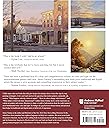
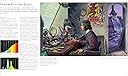
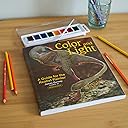
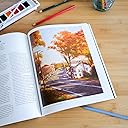
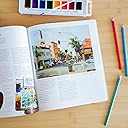
From New York Times best-selling author of the Dinotopia series James Gurney comes a carefully crafted and researched study on color and light in paintings. “James Gurney's […] book, Color and Light , cleverly bridges the gap between artistic observation and scientific explanation. Not only does he eloquently describe all the effects of color and light an artist might encounter, but he thrills us with his striking paintings in the process.” – Armand Cabrera, Artist James Gurney follows up his acclaimed work Imaginative Realism: How to Paint What Doesn’t Exist with his second art-instruction book, Color and Light: A Guide for the Realist Painter . Beginning with a survey of underappreciated masters who perfected the use of color and light, Gurney cuts though the confusing and contradictory dogma about color, testing it against science and observation. Color and Light examines how light reveals form, the properties of color and pigments, and the wide variety of atmospheric effects. Includes a glossary, pigment index, and bibliography An indispensable tool for art students and artists. Perfect for artists at any skill level who want to deepen their knowledge of the use of color and light in their paintings, and a valuable instruction manual for art teachers in classroom or other settings. Review: Wonderful Art, Insightful Training - This is a fantastic study of "the basics" for anyone creating visual art. I print and paint miniatures, and this book has been incredibly useful for understanding everything from composition to contrast. Review: Good - A great, detailed yet simple guide. Easy to follow and in-depth.


| Best Sellers Rank | #7,588 in Books ( See Top 100 in Books ) #6 in Graphic Design Color Use #7 in Painting (Books) #7 in Arts & Photography Study & Teaching |
| Customer Reviews | 4.8 out of 5 stars 5,527 Reviews |
B**R
Wonderful Art, Insightful Training
This is a fantastic study of "the basics" for anyone creating visual art. I print and paint miniatures, and this book has been incredibly useful for understanding everything from composition to contrast.
J**S
Good
A great, detailed yet simple guide. Easy to follow and in-depth.
A**E
Valuable Source
The process to receive this book was a very positive experience. Though I'm not too deep into it yet, the book appears to be a valuable read for anyone interested in the visual arts
A**I
Best Book I have ever read
This book did not disappoint, in fact it is one of the best books I have ever read so far. Art is a subjective process where you rely more on a hunch and instinct to get things looking good. To find an artist who is conscious enough to explain all the workings of color and light is not easy since it is like putting a formula to emotions. Chapter 1 Tradition In the first chapter, the author wastes no time and delved right into how the great masters did it in their time with the limited pigments and how they made up for the limitations with skill. Chapter 2 Sources of Light In the second chapter, the quick basics of light is briefly explored from direct sunlight to window light. In the later part of the chapter, James Gurney gives accurate descriptions on rare occasions where there is a hidden light source or light sources that emits from objects. Chapter 3 Light and Form The third chapter covers all the lighting from each direction and all the various types of shadows. Chapter 4 Elements of Color This is where it gets interesting. There are some articles and books on Color that are either too technical or too brief. In this chapter, we are introduced to the basics of color and there is a sub-page on the history of color wheels that is very enlightening. You must be thinking, "Color Wheels again.." but I can assure you that most of your questions about how the wheel came to be and other variations of the wheel is all covered here. Chapter 5 Paint and Pigments After the introduction to color, we get right into traditional paint and pigments. Here, the techniques for color mixing and pallete arrangements are introduced. You can't help but feel that the author is being very generous with his knowledge really. He also briefly covered a warm underpainting in this chapter. Chapter 6 Color Relationships The 6th chapter is a prelude to the coming chapter. It is basically a demonstration that color information changes depending on the adjacent colors that is placed next to that color. It is all about color relationships and how the warm and cool colors differs from each pallete. Chapter 7 Premixing The core of the book lies in Chapter 7. It covers the all important color picking or in the traditional sense, premixing. It teaches the reader how to restrict their color pallete in order to create more harmony in a painting. Chapter 7 Premixing In this chapter, gamut mapping and masks is covered with examples of how it would look like in an actual painting. Chapter 8 Visual Perception Next, there are some exceptions when it comes to all the rules of colors and here it is covered in the Visual Perception chapter. Tricky situations like moonlight color and color constancy is covered in depth. Chapter 9 Surfaces and Effects The final chapters are filled with techniques to render all other forms of effects like scattering, hair, caustics, motion blur and highlights. Chapter 10 Atmospheric Effects Finally, the rest of the book covers all the atmospheric effects of sunlight and certain materials like snow, water, rivers and underwater. If you are expecting to be spoon fed with palletes and sure fire methods of handling color then you are mistaken. However, after going through this book, you will be armed with an understanding of color like never before ..more at [...]
J**L
I needed this 20 years ago
Here I am an artist with three art degrees... and I never learned most of this information! My main degree was in painting and Illustration!!!! Honestly the most I learned was about cool and warm color and value - that's IT! This book is easy to grasp, pithy and organized in such a way that you can go right to the area you are interested in without having to scan the entire book. I learned more about how to use color and paint light in the hour I ravenously scanned through it than I did in all those years of college. If you wish to learn anything about painting you must have this book! It may seem such a simple subject, but how to set up a palette is one of the MOST confusing things an artist learns. Many times you just pick up a palette that someone else used and wing it until you get comfortable with it. Mr. Gurney actually takes so much of the mystery out of how to choose your palette of colors and how to work with what you have in that palette. This section ALONE is worth the price of the book! Also he explains how our vision works so we can be aware of it and make better choices in how we render color and light in our images - as well as how to pay attention to depth of field! I especially loved the comparison of a photograph and a painting from observation and how much you miss in the photo. Again, this information alone is worth the price of the book! If you are and artist looking to learn how to render an image realistically and believably, this book MUST be in your library. Mr. Gurney has taken information from many divers sources that would take another person years to gather if you could even find these out of print books and information, and he has put it all in a well-organized and easily read book that is so deeply appreciated for its clarity. Thank you, Mr. Gurney, for all your hard work. This book should become and textbook in any painting class!
M**H
This Book Has Redefined My Appreciation of Visual Art
Bear with me here... I have a background in music, I play guitar and know enough music theory that, while I'm not terribly good at it, I do feel like I can appreciate music in ways that others without a similar background cannot. I'm 75% of the way through this book, and I feel like this book is giving me an equivalent set of tools to appreciate visual art. It's amazing. My hobby is miniature figure painting, and I was in deep, and this book has made it that much better. The brilliant bit is that I look at the world around me a see stuff in new ways all the time. Some things you need to practice, but a lot of this book is just pointing things out that you can observe all the time in the world around you. So I'm very happy with this purchase. If you are or were an art major, maybe you don't need this book, but for us ignorant n00bs coming into an artistic hobby later in life, this book is great. The language is concise and to the point, with typically multiple excellent examples on every page spread. One has only to connect the words and the pictures and the concepts leap out. I haven't found anything I don't like about this book. I suppose I could say that sometimes he only dips into certain concepts just to explain the part of that concept that backs up what he's trying to show you in the book. Additive vs. subtractive color mixing, for example - he explains additive but there doesn't appear to be an equivalent explanation of subtractive, or why it is called subtractive. My brain just wants to know these things! But this isn't a flaw, this is just something to note and follow up on later, which makes the learning experience, in my opinion, that much richer.
�**�
A wealth of information on color theory and light
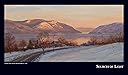
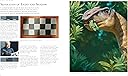
This book by Dinotopia author, James Gurney, explores the realist painter's most essential tools: color and light. Mr. Gurney's many years of acclaimed oil painting experience are behind this carefully crafted study on the best way to render color and light in paintings. The book deals with color in a very practical sense, including rethinking the color wheel, mixing colors, and the history of pigments. Mr. Gurney also helps to remove some of the confusion in setting up an appropriate and workable palette. I found the lessons on sources of light, visual perception, atmospheric effects, and his explanation of how light reacts with surfaces and other elements to be both helpful and fascinating. You'll find information on gamut mapping, underpainting, glazes, and the painting of hair to name just a few. There are numerous techniques and painting tips scattered throughout the book. The various theories of color and light are demonstrated on beautiful color depictions of James Gurney's own paintings as well as the work of a number of other accomplished artists who have perfected the portrayal of color and light in their own paintings. This is a thoroughly informative and enjoyable book and I highly recommend it to any artist working to improve their own paintings.
X**R
Just get it, Man! You Know you Want to.
Absolutely loved studying alongside James Gurney's book. The concepts covered in his book (which are also covered on his youtube channel, *cough cough*.) are written and explained well, allowing anyone with some basic painting knowledge to start applying the principles he shows in his book, regardless if you are actually a realist painter (I believe the sections on color choice in specific environments are especially good). If you are on the fence about buying this book, it is well worth it. The book comes in a large format, with excellent printing. My only complaint is that I could not buy a hardcover version. Anyone reading this review, NEVER give up on art! You will win!
A**ー
Best book for light & color study!
I've always been struggling with color theory & lighting and this book gave me a very broad insight! My art improved significantly after implementing everything I learned from this book, a must buy for all artist!
J**C
Gorgeous book, well worth buying
Incredible book that made me recollect my childhood; Gurney has invaluable advice in addition to beautiful artwork
F**.
Llegó en excelente estado, el libro muy completo en sus temas
Me gustó que llegó en buenas condiciones, el libro está increíble. James Gurney abarca muchos temas sin abrumar al lector. Comienza con un poco de historia del arte y va abordando cada tema por página. La parte de color me gustó mucho ya que siento yo es la más completa.
L**R
Not an easy read but packed full of interesting ideas and information.
I had already bought and enjoyed James Gurney's previous book and was looking forward to reading this one. I was initially disconcerted by how much harder going this one was. I had read " Imaginative Realism" in one sitting but had to digest this one in chunks over several days. I was a bit disappointed that he only devoted 17 pages to paint and pigments which I felt could have been given more space and attention. Especially since some colours are better suited to oils than other media and the advice to just try them out to discover their properties seemed less than helpful. (Although I was rather pleased that one of the limited palettes he recommended was one I am currently exploring.) This said, there are a lot of interesting topics that are not usually covered separately in most books. The chapters on light sources were something I found inspirational, to the extent that I found myself looking closely at the qualities of reflected light in the cityscape I have been working on. There are sections in the book I am unsure about. The idea of gamut mapping to choose colours is an idea I find overly technical and unsympathetic and am unlikely to adopt. But generally I was delighted to find many things in this book that I had learnt by observation and to find out the scientific basis for them. It would have saved me a lot of trial and error over the decades if I had owned this book at college. There are also a good few interesting techniques to try out that are new to me. Although I tend to premix some gouache greys before starting to paint I haven't tried premixing most of the colours for a piece before I begin. Or pre painted skies to base plein air pieces on, come to that. This is an interesting book that I think any painter will derive some benefit from. You may not agree with everything the author advocates but it will definitely make you think. Unfortunately it is not a book for the complete beginner, unless they are willing to glean what they can and then put it away for later. But if you are already a painter it will not only confirm what you have already learnt but also give you a lot of new ideas. Definitely worth buying.
A**R
It think...and valuable
Its quite..an eye opening Like opening a window to another world..btw not exaggerating 😶..but the information is too ....too much and valuable. It will take time to understand all but...I can use little information from this book and get a lot done and improve a lot. It's that good....btw not exaggerating.
Trustpilot
2 weeks ago
1 month ago