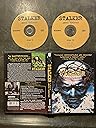
Stalker: A Film by Andrei Tarkovsky
Product ID: 2292847
Desertcart purchases this item on your behalf and handles shipping, customs, and support to UK.
Challenging, provocative, and ultimately rewarding, Andrei Tarkovsky's Stalker is a mind-bending experience that defies explanation. Like Tarkovsky's earlier and similarly enigmatic science fiction classic Solaris , this long, slow, meditative masterpiece demands patience and total attention; anyone accustomed to faster pacing is likely to abandon the nearly three-hour film before its first hour is over. On the other hand, those who approach Tarkovsky's work in a properly receptive (and wide awake) frame of mind are likely to appreciate the film's seductive depth of theme and hypnotic imagery. Set in what appears to be a post-apocalyptic future (although the time-frame is never specified), the eerie and unsettling story focuses on the title character, Stalker (Aleksandr Kajdanovsky), who leads characters known only as the Writer (Anatoli Solonitsyn) and the Scientist (or Professor, played by Nikolai Grinko) into a mysterious region called The Zone. Tarkovsky films their journey as a long odyssey, or religious pilgrimage, and center of The Zone--said to be under an alien influence--is where each of these men hopes to find a kind of personal transcendence. Despite obvious parallels to The Wizard of Oz , Tarkovsky's film is devoid of special effects or any fantastical elements typically associated with science fiction or fantasy. Instead, Stalker makes astonishing use of sound and bleak-but-beautiful imagery to envelope the viewer into the eerie atmosphere of The Zone and the dank, colorless landscape that surrounds it. And while the film's glacial pacing may be off-putting to some viewers, there's no denying that Stalker has a mesmerizing power of its own, including a thought-provoking and highly debatable ending that propels the film to a higher level of meaning and significance. --Jeff Shannon Stalker Review: Interesting version. Classic - I enjoyed this new version of Stalker. I did not mind the yellow sepia ish effect. This movie reminds me of 3 guys who are on a hallucinogenic trip outdoors The whole film is like that deep self examination that you go through during a serious psychedelic experience. I love this film. I was a little on the fence about the new transfer but quickly came to love it.There is a divide in the meaning of the film in that there are parts that are clear in relation to the types of questions meant to be addressed. The symbolic meaning of having an artist/writer and a scientist are clear in the argument proposed. Tarkovskey is obviously worried about dehumanization and science becoming too advanced as made claer in Solaris -more specifically the ending. I feel this film is in Tarckovsky's slightly commercial category. What i mean by this is ,like Solaris, i feel he uses a futuristic as well as supernatural element (depending on how you interpret those moments) to capture a larger audience while possibly fooling them into finding out something about themselves as well as their environment. This film has one of those artistic fail safe devices that has multiple meanings and even if you do not grasp all of the meanings it is almost impossible to miss some of the intention.There seems to be a lot of elaborate reviews for this so i will point out a few tidbits of significance. There is a very positive point that is explicitly made in that The artist as well as the Scientist seem to upset the Stalker in the end because he thought by taking 2 people of the mind they would understand the lessons of the Zone. The Stalker is an introverted socially lacking type who we find out is most likely equal if not more academically skilled that the 2 professional due to his extensive library of reading materials shown in his house that is purposely not shown at the beginning (even though we see many good interior shots of the Stalkers home. Tarkovsky is making statements that are not hard to figure out such as the overall theme of having hope in life. There is an agnostic as well as a unified field type of suggestion. I have thought for years that Andrei Rebleiv is my favorite Tarkovsky film and i still hold that opinion because i feel it is the ultimate ode to real artists. I also prefer The Mirror ,Nostalgia,Ivans Childhood and The Sacrifice over Solaris or Stalker. Stalker is a film that is growing on me. It does seem to have a direct message while most of Tarkovskies films leave more to ponder. The mystery element of the film is what exactly is the cosmic-ness of the Zone. I find any comparison to Roadside Picnic completely irrelivent to Tarkovskys film. Often people will jump on a film for not being in sync with the book. This is a common response from closed minded people. There is no rule for interpreting a work of art. You never hear anyone going on and on abut the differences in the Richard 11 films. That is because people who know that material are not pop critics. For someone to compare this film with either a. Chernobyl or b. Roadside Picnic is comparing a non argument and instantly turns into puedo intellectual backwash. There may be loose connections to Chernobyl but that would be too obvious. Look at The Sacrifice or Nostalgia. Those films are the only real Tarkovsky films that have a straight forward meaning. This leaves the viewer to form their own meaning using the loose structure Tarkovsky gives them. Anyone who will completely disregard a film because it does not match with the source novel should not be watching an art film to begin with. One of my favorite criticisms of film versus novels is Vladimir Nabokov's Lolita. Most people do not even realize Nabokov himself wrote the film script, intentionally making it challenging. Challenging in making it able to be a film in the early sixties. Back in the day film studios had legit authors like Capote and Chandler writing film scripts so the Lolita script was actually a great work of art. Hearing Tarintino criticize the script is funny because he is supposed to know so much about films. Back to Stalker, anyone even remotely concerned with the Russian history or book comparison is not only missing the point of the film but also getting stuck in a corner. Each of the characters in the film represent a generalization that could apply to any battle with science, man and nature. I feel this film is very accessible and also the last time Tarkovsky would do that. Calling it a sci-fir film is very non cerebral and again not within the category of films that require a different kind of thinking. Review: 'The Wizard of Oz' crossed with 'The X-Files' - This is my updated review -- for the Criterion Blu-ray edition: The Blu-ray is crystal clear and a huge improvement on the DVD that I bought years ago (by KINO). The sound is also vastly better. It is like seeing the film for the 1st time again. Criterion did an awesome job on this, Thank-You! If you like journeys into abandoned places and landscapes, and also philosophical 'meaning of Life' tales, and a sprinkle of lovely spoken poetry... not to mention fantastic, mesmerizing scenery that lingers in your mind - then this is a film experience that you should enjoy. But it is a slow-paced film (but that is its charm as well, for me). When I watch this, it gives me a 'mind-break vacation' from the daily world of our often crazy reality... 'Stalker' was adapted from the Strugatsky brothers novel ' Roadside Picnic', and is that rare film that takes time to watch and understand the story, but it is well worth the effort. It is a surreal road trip... like 'The Wizard of Oz' crossed with an extended episode of 'The X-Files'! (but in Russian - with English subtitles). And it has humor too. Basically, this is about a 'stalker' - a guide that illegally takes people into a forbidden place called 'The Zone', where it is suggested that something unusual landed years ago, changing the area forever. The Zone is very dangerous and mysterious, and many that go in there never return, but will vanish or die without the stalker. Stalker (a nickname) has an almost spiritual relationship with the Zone. It is like a holy and sacred place for him, even with all its known and hidden dangers. Much of the dialog between him and the two people he guides (Professor and Writer) is a big part of the enjoyment of the story, and all of the visuals and cinematography in many scenes make for some very magical and breathtaking film watching! After 2 viewings I was hooked. This is now one of my favorite films (next to '2001' and 'Blade Runner'). I also read the book this was adapted from, and though there are differences, both are satisfying adventures that should not be missed! Along with 'Solaris' (1972), this is one of my favorite films by Russian director Andrei Tarkovsky. He was a real poet of filmmaking , and this might be his masterpiece - a real 'mind trip' of a movie! Thank-You for reading... but go watch 'Stalker' today!
| Customer Reviews | 4.7 out of 5 stars 1,951 Reviews |
R**R
Interesting version. Classic
I enjoyed this new version of Stalker. I did not mind the yellow sepia ish effect. This movie reminds me of 3 guys who are on a hallucinogenic trip outdoors The whole film is like that deep self examination that you go through during a serious psychedelic experience. I love this film. I was a little on the fence about the new transfer but quickly came to love it.There is a divide in the meaning of the film in that there are parts that are clear in relation to the types of questions meant to be addressed. The symbolic meaning of having an artist/writer and a scientist are clear in the argument proposed. Tarkovskey is obviously worried about dehumanization and science becoming too advanced as made claer in Solaris -more specifically the ending. I feel this film is in Tarckovsky's slightly commercial category. What i mean by this is ,like Solaris, i feel he uses a futuristic as well as supernatural element (depending on how you interpret those moments) to capture a larger audience while possibly fooling them into finding out something about themselves as well as their environment. This film has one of those artistic fail safe devices that has multiple meanings and even if you do not grasp all of the meanings it is almost impossible to miss some of the intention.There seems to be a lot of elaborate reviews for this so i will point out a few tidbits of significance. There is a very positive point that is explicitly made in that The artist as well as the Scientist seem to upset the Stalker in the end because he thought by taking 2 people of the mind they would understand the lessons of the Zone. The Stalker is an introverted socially lacking type who we find out is most likely equal if not more academically skilled that the 2 professional due to his extensive library of reading materials shown in his house that is purposely not shown at the beginning (even though we see many good interior shots of the Stalkers home. Tarkovsky is making statements that are not hard to figure out such as the overall theme of having hope in life. There is an agnostic as well as a unified field type of suggestion. I have thought for years that Andrei Rebleiv is my favorite Tarkovsky film and i still hold that opinion because i feel it is the ultimate ode to real artists. I also prefer The Mirror ,Nostalgia,Ivans Childhood and The Sacrifice over Solaris or Stalker. Stalker is a film that is growing on me. It does seem to have a direct message while most of Tarkovskies films leave more to ponder. The mystery element of the film is what exactly is the cosmic-ness of the Zone. I find any comparison to Roadside Picnic completely irrelivent to Tarkovskys film. Often people will jump on a film for not being in sync with the book. This is a common response from closed minded people. There is no rule for interpreting a work of art. You never hear anyone going on and on abut the differences in the Richard 11 films. That is because people who know that material are not pop critics. For someone to compare this film with either a. Chernobyl or b. Roadside Picnic is comparing a non argument and instantly turns into puedo intellectual backwash. There may be loose connections to Chernobyl but that would be too obvious. Look at The Sacrifice or Nostalgia. Those films are the only real Tarkovsky films that have a straight forward meaning. This leaves the viewer to form their own meaning using the loose structure Tarkovsky gives them. Anyone who will completely disregard a film because it does not match with the source novel should not be watching an art film to begin with. One of my favorite criticisms of film versus novels is Vladimir Nabokov's Lolita. Most people do not even realize Nabokov himself wrote the film script, intentionally making it challenging. Challenging in making it able to be a film in the early sixties. Back in the day film studios had legit authors like Capote and Chandler writing film scripts so the Lolita script was actually a great work of art. Hearing Tarintino criticize the script is funny because he is supposed to know so much about films. Back to Stalker, anyone even remotely concerned with the Russian history or book comparison is not only missing the point of the film but also getting stuck in a corner. Each of the characters in the film represent a generalization that could apply to any battle with science, man and nature. I feel this film is very accessible and also the last time Tarkovsky would do that. Calling it a sci-fir film is very non cerebral and again not within the category of films that require a different kind of thinking.
A**G
'The Wizard of Oz' crossed with 'The X-Files'
This is my updated review -- for the Criterion Blu-ray edition: The Blu-ray is crystal clear and a huge improvement on the DVD that I bought years ago (by KINO). The sound is also vastly better. It is like seeing the film for the 1st time again. Criterion did an awesome job on this, Thank-You! If you like journeys into abandoned places and landscapes, and also philosophical 'meaning of Life' tales, and a sprinkle of lovely spoken poetry... not to mention fantastic, mesmerizing scenery that lingers in your mind - then this is a film experience that you should enjoy. But it is a slow-paced film (but that is its charm as well, for me). When I watch this, it gives me a 'mind-break vacation' from the daily world of our often crazy reality... 'Stalker' was adapted from the Strugatsky brothers novel ' Roadside Picnic', and is that rare film that takes time to watch and understand the story, but it is well worth the effort. It is a surreal road trip... like 'The Wizard of Oz' crossed with an extended episode of 'The X-Files'! (but in Russian - with English subtitles). And it has humor too. Basically, this is about a 'stalker' - a guide that illegally takes people into a forbidden place called 'The Zone', where it is suggested that something unusual landed years ago, changing the area forever. The Zone is very dangerous and mysterious, and many that go in there never return, but will vanish or die without the stalker. Stalker (a nickname) has an almost spiritual relationship with the Zone. It is like a holy and sacred place for him, even with all its known and hidden dangers. Much of the dialog between him and the two people he guides (Professor and Writer) is a big part of the enjoyment of the story, and all of the visuals and cinematography in many scenes make for some very magical and breathtaking film watching! After 2 viewings I was hooked. This is now one of my favorite films (next to '2001' and 'Blade Runner'). I also read the book this was adapted from, and though there are differences, both are satisfying adventures that should not be missed! Along with 'Solaris' (1972), this is one of my favorite films by Russian director Andrei Tarkovsky. He was a real poet of filmmaking , and this might be his masterpiece - a real 'mind trip' of a movie! Thank-You for reading... but go watch 'Stalker' today!
K**N
The Great Existentialist Science Fiction Film
It'd been many years since I had seen Stalker, Andrei Tarkovsky's excellent science fiction film, and I watched it last night. For a science fiction movie, Stalker is certainly an oddity. Released in 1979, loosely based on the short novel Roadside Picnic by Arkady and Boris Strugatsky, and directed by Tarkovsky, the masterful Russian director who lived too short a life, it tells the tale of a part of Russia that has been visited by an odd event. It may have been a meteorite that fell, or it may have been an alien visitation. But the event created the Zone, a dangerous area which was cordoned off by the police, and where few could go. A Stalker - a sort of guide who takes people through the traps in the Zone - meets up with two men who want to visit the Room, a place where wishes come true. One is a Professor, a man of reason, and the other a writer, a man of inspiration. The Stalker is a man of belief. Very little happens in the movie, which lasts more than 2 1/2 hours, except for their trip to the Room, and their discovery of what they want from it. Stalker is science fiction only in its premise; there are no aliens, no magic, nothing that would be noticed as science fiction. It is a slow movie; very little happens, and some of the shots are several minutes long. It's a science fiction movie as it would have been written by Samuel Beckett. Yet it's a brilliant existential examination of the desires of men and women. At first, the film begins in sepia-toned black-and-white, but once the three characters reach the Zone, the film changes to color. Just as Oz was in color, so was the Zone. The Zone is located outside an industrialized city, and is full of the detritus of modernity. Yet Tarkovsky films these banal, cast-off items with the plastic beauty that he showed in all his films. Some of the shots are breathtakingly haunting, yet there is nothing special in them. In a prescient shot, near the end of the movie, the Stalker can be seen returning to his home with his wife and daughter, and, across the river, a nuclear power plant is seen. The Zone could be the area surrounding Chernobyl. There is no devastation, simply signs of nature taking over some human artefacts. According to an interview with the production designer, the film took two years to shoot. The first year's footage was lost, apparently because it was an experimental film stock that couldn't be developed. (Though that suggests that it was only sent for development after the entire film was shot, which seems at odds with the way movies were created at the time.) Tarkovsky then started over, reshooting the entire movie, over another year. The DVD is decently produced, though the English subtitles are a bit clunky. It contains the original mono soundtrack, and also a recent 5.1 mix, which, in my opinion, ruins the movie. It is merely the mono soundtrack with added environmental sounds, trying to create "atmosphere," yet Tarkovsky used a lot of silence in this film, and the surround mix is never quiet. I first saw Stalker in the early 1980s at a retrospective of movies by Wim Wenders in New York. Wenders had made a selection of films to be shown with his movies, and, preceding his Kings of the Road (In the Course of Time), was Stalker and John Ford's The Searchers. All three of these movies are quests, searches for people or ideas, and the very long program that day (more than 7 hours) was an extraordinary example of three different approaches to the quest movie. Since then, it has been one of my favorite films. It's an odd movie, more like a Beckett play than science fiction, yet it is unforgettable. If you've never seen Stalker, you should by all means watch it. It is a truly unforgettable movie by one of the great directors of the 20th century. His life and career were too short, but his films are all masterpieces.
S**H
A stunning meditation on the nature of belief
I recently got into the world of Soviet cinema when I watched the 1986 sci-fi bizarro comedy "Kin Dza Dza" on Amazon Instant Video. Shocked by what a good feature it was, I searched for more Soviet science fiction and came across two films by the same director that stood out: "Solaris" and this film, "Stalker." I was a little underwhelmed by Solaris, don't get me wrong I liked Solaris a lot, but it didn't match what I expected it to be in my head. "Stalker," on the other hand, went way above and beyond my expectations. As you probably know, Stalker is a film about a sort of guide, called a stalker, who guides people through a surreal landscape sectioned off by the government due to its unpredictability called "The Zone," which was supposedly the sight of an alien crash landing some thirty years prior in this film set some time in the indefinite future. The stalker's job is to navigate the Zone because of its ever-changing nature and lead his clients to a place called "The Room," which supposedly grants wishes, or rather, makes whatever someone's deepest desire, whatever wish that has caused them the most pain-- make that dream a reality. As a result of this, no one leaves the Zone or the Room the same. The stalker in this movie guides two men going by the aliases of the Professor and the Writer through the Zone and to the Room in what becomes over a series of heated debates between the men leading up to the climax a stunning meditation on the nature of belief. The movie was filmed in the old USSR, where religion was banned. I'm not the most religious person in the world, I'll be the first to admit that, but the stalker seems to be a man of some faith, and is ultimately dismayed at the results of what he says at the end of the film will be the last time he guides anyone through the Zone. He swears he'll never take anyone to the Room again based on the end of his latest adventure because the people he guided there lacked the necessary belief to have their wishes granted, or maybe even the basic belief to even want to have their wishes granted. It's a stunning conclusion, and I'm trying to write it out with as few spoilers as possible, here, but I've already said too much. The film is beautifully restored in a 2K restoration and it was apparently filmed in 4:3 ratio, which I found a little confusing at first, but that's the way it's supposed to look-- if you have a widescreen TV, the black bars on the sides of your screen are normal. I was actually a little taken aback by this at first considering that "Solaris" was filmed in 2:39:1 or at least 16:9 and filled all or most of my television screen. But back in the 1970s and 80s it was not unheard of to film a movie in the 4:3 ratio because that's the same ratio that old TVs were back then. A good example of this is "The Shining," which was filmed in 4:3 and cropped to a more theatrical ratio, which is precisely why I haven't bought "The Shining" on Blu-Ray because all the Blu-Ray versions of "The Shining" are cropped to a 16:9 format from the original 4:3, but in the case of "Stalker" the original aspect ratio is retained and restored in beautiful 2K. The special features didn't speak a whole lot, which is sad considering this is a Criterion Collection Blu-Ray, there were a few interesting interviews from 2002 with some of the people who worked on some of the more technical aspects of the film, but nothing with any of the actors which I assume is because many people involved with direct production of this film got sick from the heavy pollution surrounding the outdoor sets, some of whom even died, including the director. But there's also an interview Geoff Dyer, who's like a superfan of the movie and wrote an entire book about it, but nothing in particular that I found extremely enlightening. This was also the case with the Solaris Blu-Ray-- which I also found sad, aside from the great restoration done on the film itself. So this Blu-Ray is really more about the feature itself than the supplements which are usually the highlights of a Criterion Blu-Ray. All in all, this is a thinking man's movie. I wouldn't recommend it to the casual moviegoer because they're likely not to "get" it. If you liked "Solaris" chances are you'll like "Stalker" even more. It's soft sci-fi bordering on fantasy but sci-fi nonetheless. It was made in a world where all direct talk of gods or God was strictly forbidden and does a great job at getting around that by having several discourses on the nature of God, faith and belief or lack of belief. I watched this film back to back with "Solaris" and that makes for an excellent double feature and if you buy this Blu-Ray, you should probably also buy Solaris on Blu-Ray because as I said, they go well together. But to sum up this review, "Stalker" is a stunning meditation on the nature of belief and what it meant to be a believer in a world that had outlawed believing.
M**G
Tarkovksy's bulletproof masterpiece, or If you are watching this film, this film is about you.
Watch out -- big spoilers here. "Stalker" is the story of a man guiding two others (a Writer and a Scientist) through The Zone (a cordoned off and abandoned wilderness) to The Room where they will achieve their "heart's desire". During the journey we're given the obligatory and angst ridden insights into each man's character and learn that, while the Stalker can get them to the room, he is himself forbidden entry. We also learn of a previous visitor (called Porcupine) who returned from the room to fabulous wealth and then killed himself. "Stalker" has been hailed by many as a masterpiece. But "Stalker" is long and slow (163 minutes), and lots of people (who seem to be anticipating some kind of "Citizen Kane" thing) have trouble with this, get upset, and write reviews about "The Emperor's New Clothes", etc.. Which is fine, because the joke is on them. "Stalker" is one of those movies that either you get, or it gets you. It is, of course, an allegory. The Writer and Scientist are obviously symbols for the right and left brain, and The Stalker is obviously a Film Director (Artist). The Journey is the work itself, and the Room is the mirror that great Art is: to enter is to risk discovering something new about yourself. This is why Porcupine committed suicide: when he discovered his heart's desire he couldn't face it. Eventually the Stalker gets Writer and Scientist to the threshold of the room, but the journey has shown them enough about themselves to give them second thoughts -- they are petty, vengeful, shallow, narcissistic, insecure -- and on the verge of achieving their "heart's desire", they refuse to go in. Back home they go their separate ways, the Stalker returning to his miserable home, long-suffering wife, and crippled child. He is despairing: he won't go back there, can't make the journey again. It's a waste of time. But while he sleeps his wife tells us otherwise. Tarkovsky's science fiction films are probably his most autobiographical: "Solaris" (his relationship with his father), "Stalker" (his wife), and "The Sacrifice" (his son). Depending on your mood, they can all be a hard slog, but it is "Stalker" that is probably the most gut-wrenchingly personal: it describes the agony, effort and despair that confronts any artist trying to make something of value. And the humiliation when it is wasted on fools. "Stalker" is a film about Art, The Audience and The Artist that is so masterfully constructed it traps the Audience inside the idea that is the film: a work of Art about the Artist amd his Audience; a complete statement about the relationship between Director and Audience: if you are watching this film, then this film is about you. It's a gag worthy of the Coen Brothers (maybe even the Marx Brothers in "Go West"). Once the film begins, you are there: you *are* on the journey (literally and metaphorically). You *are* taken to the room (literally and metaphorically). An artist trying to see their own work is like a magician trying to be surprised by his own tricks. Whatever the original inspiration might've been, in the end it's reduced to process -- the journey. Like the Stalker, this was Tarkovksy's lot in life -- no magic, just a long and arduous journey to a place that someone else will get to enjoy. But if you've ever made art, you will recognize the path, and sometimes that's enough. For everyone else, love it or hate it, "Stalker" -- the movie -- *is* the room. You looked into the mirror, and you didn't even know it. Or maybe you did.
L**E
An impeccable release of a legendary film
First off, if you’re new to Tarkovsky do not watch this film before going to bed. Set aside an afternoon on the weekend and make yourself a couple of cups of coffee. This is a film that demands your complete attention. You have to surrender yourself to it and immerse yourself in the world Tarkovsky has created and process every single line of dialogue. You might not understand everything in one viewing but that’s ok! As for the presentation itself, it’s superb. The transfer is made from a 2K scan (2048x1080), but it’s clear that the guys at Mosfilm treated this one with lots of care. Of course it would’ve been even better had the restoration been done in 4K, but trust me when I say that this is one of the best 2K restorations of a foreign film that I’ve seen. You won’t find a single blemish of any kind nor aggressive DNR, edge enhancement and other processing which almost always negatively the picture quality. I watched this on my calibrated LG C8 and the black levels are perfect, delineation is excellent and depth is terrific. The audio is pristine as well. It’s what you would expect from a recent Criterion release. Unfortunately it’s short on extras compared to Andrei Rublev and The Mirror, but they’re all worth watching. They’re relatively short as well and they offer some valuable insight into Stalker’s production. Definitely check out them out once the film ends.
F**T
Tarkovski's Other Sci-Fi Film Now Given the Criterion Treatment in Blu Ray!
Widely regarded as Tarkovski's "Solaris" sequel "Stalker" is a different film but only a little so as once again the director chooses to focus more on the cerebral, human issues rather than on the "science" in this sci-fi offering. Tarkovski gives a wink to and seems to make fun of the parts of the audience expecting "Solaris Pt 2" by including a strange scene in the beginning of the protagonist's wife writhing on the floor in a kind of painful ecstasy/torment which clearly imitates the scene with the frozen female lead in "Solaris". Otherwise this film deals with the true inner desires of man and whether he is truly ready to face them when given the opportunity or is he just too afraid and so is this endeavour a foolish and pointless one? Maybe what we truly desire is something very different from what we think and can only be provided for spiritually and not materially? As all great classic films do this one challenges the audience and not just with the long nearly 3 hour length but it does make you think and assess your own views and values. Just like "Solaris" this film raises spiritual questions but in a subtle enough way to avoid/confound the Soviet censors. This Criterion release is as expected a well restored picture and sound quality version with a foldout containing an essay on the film also included with the blu ray disc. There is no doubting the master Tarkovsky's brilliant direction and while this is not his best ever film like say "The Mirror" or "Andrei Rublev" this is still a classic worthy of any serious film buff's video library. Highly recommended!
S**Y
The Science of Fiction
Is it four stars or five? Well if you put it right back in and watch it again, I guess it's five. First off, Stalker is beautiful. The opening titles just get in the way of the not-quite black-and-white Tarkovsky achieved by filming in color and processing in black and white. It's my first Tarkovsky and I'm already doing research! You immediately know that you are in the presence of something great, a Kurosawa, a Besson, an unTarantino. That Stalker could get made in 1979 in the Soviet Union is incredible, especially considering some of the quotes and allusions. Oh it's slow and boring, some have complained. Two minutes of a dude walking across a field; two minutes of the same dude walking back. Nothing happening. Not true, there is always something happening in a Tarkovsky shot, you just gotta look for it. The foreground is shimmering, the background is shimmering, the guy lying motionless in the grass has a leech crawling across his hand and so on. Stalker is also one of the wettest movies you'll ever see, drip drip dripping like Zed and Two Noughts, The Faculty, or even Das Boot. The director imbues ordinary scenery and locations with such dread and foreboding that you too fear every step, but feel compelled to go on. How does he do it without the cellos and the splatter and other hackneyed devices that are currently used to portray suspense? There is a subtle sense of humor too. A conversation ensues between the three characters and the camera pans back and forth between them in a conventional way. The three march off and the camera remains, it was really taking no one's perspective, it was some fourth other, maybe The Zone itself watching them! Don't turn the sound down for the famous rail transit into the Zone (some claim the scene was intended to be silent) Turn It Up! way up, and enjoy the Persian tar and Tarkovsky at his best. The ending? Well enigmatic about covers it, but maybe it's like the couple of slow spots in the film, you just need to view it more. Besides, anything vaguely M. Night Shyamalan-ish would have been a travesty. Perhaps the answer is in 'Roadside Picnic' the book Stalker was based on, but I doubt it could be that simple.
J**E
Only for the mind that will get it
A slightly odd film. Cold, paced, mystical, odd, slightly fearful. Searching for answers, it arrives back with none but the experience. Not to everyone's taste.
R**S
A regarder une première fois (seul?) sans interuption, ni avoir lu quoi que ce soit au sujet.
Tout est dans le titre. Ce serait dommage de gâcher certaines surprises en lisant trop de commentaires par avance. Il y aura assez de questions ou de détails pour le revoir une seconde fois... L'atmosphère de ce film est simplement unique.
N**O
Stalker Obra maestra
Magnum Opus
の**り
沁みます / 追記 DVDとブルーレイ比較について 2015.6.14
25年以上前のことですが・・・本作が初めて観たタルコフスキー作品でした。確か、日活ビデオだったと思います。あまりのゆったりペースに驚き、寝てしまったものです。・・・当時は今よりもっとアホでしたから理解できなかったのでしょう。でも、後日夜中にゆっくりと見たら・・・なんだか沁みました。今でも上手く説明できませんが、不思議な感覚がありました。 ・・・ところで私も、皆さんおっしゃるとおり、【2002年IVC版DVD】については、中 (画質等) も外 (ジャケットデザイン) も不満です。ジャケットについてははじめて観た日活ビデオのジャケットが愛着があります (←今のハヤカワ文庫版ストーカーの表紙に近いデザイン)。 ・・・・・・・・・・・・・・・・【ブルーレイソフトについて】 追記 2015.6.14・・・・・・・・・・・・・・・・・ さて、念願のブルーレイを購入・視聴しましたので、手持ちの 【2002年IVC版DVD (以下旧DVDと記す) 】 と比較しながらレビューします。 【注意】 今回ブルーレイと同時発売されたDVDとの比較ではありません。 【画質等】 確かに・・・ ‘明らかに’ 向上しています。 ・・・ただ、最近発売された 『ノスタルジア』 や 『惑星ソラリス』 等の ‘ハッキリ’ した画質向上に比べると若干物足りないようにも感じます。ブルーレイとはいえ粒子感もありますし、色の滲み・画調・ディテール・明るさの不安定さ等が残ります。黒い画面では渦巻き状のノイズ(?)のようなものもありますし、そのせいか画面の中央部と周辺部では色調にズレがあります。・・・それでも緑の色の美しさや自然さ・ディテールの向上・画面の安定は素人目にもわかる程の向上ですが・・・。(→旧DVDの色は変に濃かったり・・・色が褪せているように見えたり・・・と、もっと不安定です) 本商品封入のリーフレットには、素材となったマスターやその修復作業等についての詳細なリポートが掲載されています。これはブルーレイ版 『ノスタルジア』 以上に詳細なリポートです。それによると元々のマスターが破損等のため扱いが難しいものだった (まともなマスターそのものが存在しないらしい) そうで、現在入手し得る最善のマスターを元に ‘日本での初公開時の ’印象’ に近づけること’ を目標として修復されたそうです (闇雲にキレイにするだけではなくバランスも重視したという意味です)。・・・この目標の立て方については 異論 もあるかもしれません。ただ、個人的には素晴らしいと思います。というのも・・・ ⇒このスタンスで 『ノスタルジア』 ブルーレイ が修復されていればよかったのに、と思うからです。 ところで、旧DVDと比較して ‘画角(画面)’ の向上(拡大)があることも確認できました。これは冒頭のモスフィルムのロゴを比べればわかりやすいと思います。特に下方向と向かって左方向が広くなりました (なぜか若干左右非対称にみえる) 。逆にいえばDVDでは若干のトリミングがされていたことになります。同様のトリミングは 『ノスタルジア』 や 『鏡』 の旧DVDでもありましたが、本作もそうだったとは・・・意外でした。この画角の回復は、構図の変化を伴うので雰囲気を多少変えています (もちろん良くなりました)。 そんなわけで、繰り返しますが・・・画質は ‘明らかに’ 向上しています(物足りないと感じる可能性があったとしても)。画角の向上と合わせると・・・やはり良い映像になっています。 【音質】 旧DVDに収録されていた ‘変な’ 5.1サラウンドはなくなりました (あ〜良かった) 。そして旧DVDのオリジナル音声と比較しても音質の向上が感じられます。静かなシーンなどで差が大きくなります。 【仕様について】 思えば・・・旧DVDは特典映像が豊富でした。撮影・美術・音楽・各スタッフインタヴュー・ 『惑星ソラリス』 予告・スチール・ドキュメンタリー 『タルコフスキーの家』 ・等々が含まれています。ところが、ブルーレイには映像特典は一切ありません。この点は残念です。 (・・・ところで、その旧DVDの特典には日本語字幕が一切なく英語字幕で観るしかない・・・・といった大きな欠点があります。涙)。 しかし、上記にも記した封入リーフレットは充実したものです。 (特に、本ディスク修復監修を担当された馬場広信氏のリポートは必読でしょう。氏には『タルコフスキー映画(みすず書房)』といった充実した著書もあります。) また、あの悪名高い(?)旧DVDジャケットから、斬新なデザインに変更されたことも素晴らしいと思います。 字幕については旧DVDとにっかつビデオ (岡枝慎二訳・・・つまり公開時の字幕) をあわせて引き継いだものです。内容に違和感はありません。 全体としては、明らかな画質向上が確認できました (・・・ただ上記のように最高に良いとは言えず素人目にも判るような物足りなさは感じるわけですが・・・) し、リーフレットやジャケットデザインも含めそれなりに良好な商品 (ブルーレイ化) だといえそうです。 そんなわけで長年のファンとしては (旧DVDと比べるなら明らかに) 購入して損なし と考えます。
D**O
Splendido blu-ray!!!
Il blu-ray che ho acquistato, narra la storia di un uomo, uno stalker, che ha il compito di accompagnare delle persone, in un luogo dove attraversando un tunnel, si dice che si può raggiungere una stanza dei desideri. Il film, inizia con un bianco e nero molto intenso che definisce in modo straordinario i tratti dei volti e le movenze delle persone: in seguito, quando lo stalker/ac- compagnatore, porta alla stanza dei desideri, uno scrittore e uno scienziato, si passa al colore per mostrare oltre al luogo colmo di macerie e resti vari di oggetti abbandonati, anche per evidenziare i volti spaventati dei visitatori e il volto in apprensione dello stalker. Il film è un capolavoro, per la capacità del geniale regista Tarkovskij, nel descrivere persone di varia estrazione sociale, che mostrano le loro inquietudini più estreme, senza avere delle reali certezze nella propria vita, con vari momenti di tensione profonda. Il raggiungimento della stanza dei desideri è una necessità recondita per esorcizzare i loro timori e le loro frustrazioni. Il film è straordinario anche per la potenza descrittiva, nel raccontare l'esistenza, tanto da essere ancora attuale soprattutto nella fotografia così moderna, da evidenziare i tratti caratteristici della moglie e della figlia dello stalker e riuscire a mostrare con spostamenti della telecamera lenti e precisi le loro fragilità più nascoste. Il blu-ray è arrivato nel tempo previsto, con prime.
Trustpilot
2 days ago
1 day ago