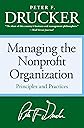

Desertcart purchases this item on your behalf and handles shipping, customs, and support to UK.
The groundbreaking and premier work on nonprofit organizations. The nonprofit sector is growing rapidly, creating a major need for expert advice on how to manage these organizations effectively. Management legend Peter Drucker provides excellent examples and explanations of mission, leadership, resources, marketing, goals, and much more. Interviews with nine experts also address key issues in this booming sector. Review: an indispensable guide for anyone involved in or aspiring to enter the field of nonprofit management - It is always a delight to come across a well-crafted edition of a classic, especially when it is authored by none other than the father of modern management, Peter Drucker. Finding "Managing the Nonprofit Organization: Principles and Practices" available on desertcart.com is a testament to the enduring relevance and accessibility of Drucker’s work. Overview "Managing the Nonprofit Organization: Principles and Practices" is an indispensable guide for anyone involved in or aspiring to enter the field of nonprofit management. Peter Drucker, renowned for his profound insights into the spheres of business and management, brings his expertise to the unique challenges and opportunities presented by nonprofit organizations. The book provides a comprehensive exploration of the principles and practices that are essential for the effective management of these organizations. Accessibility and Readability One of the standout features of this book is its accessibility. Drucker writes in a clear and engaging manner, making complex concepts easy to understand. This is particularly important for those who are new to nonprofit management, as it allows them to grasp essential principles without feeling overwhelmed. The language is straightforward, yet the content is rich with insights that are highly applicable to real-world scenarios. Practical Case Studies Drucker's inclusion of numerous case studies is another invaluable aspect of the book. These practical examples illustrate how the principles discussed can be applied in everyday situations. By examining these cases, readers can gain a better understanding of how to navigate the challenges they may encounter in their roles. The case studies cover a wide range of topics, from strategic planning and fundraising to volunteer management and leadership development. Relevance in Today's Context In the current landscape, where nonprofit organizations face unprecedented challenges and opportunities, Drucker's insights are more relevant than ever. The book addresses critical issues such as sustainability, accountability, and innovation in the nonprofit sector. For those already working in the field, it offers valuable strategies to enhance their effectiveness and impact. For newcomers, it provides a solid foundation upon which to build their careers. Future Planning and Success The book is not just about immediate solutions; it also emphasizes the importance of long-term planning and strategic thinking. Drucker encourages readers to look beyond the day-to-day operations and consider the broader goals and vision of their organizations. By doing so, they can create sustainable plans that ensure future success and growth. Conclusion In conclusion, "Managing the Nonprofit Organization: Principles and Practices" is the best practical guide available for those involved in nonprofit management. Peter Drucker's approachable writing style, combined with his depth of knowledge and practical case studies, make this book an essential resource. Whether you are a seasoned professional or just starting your journey in nonprofit management, this book will equip you with the tools and insights needed to excel in your role. The ease of access provided by platforms like desertcart.com only adds to the appeal of this classic work, making it readily available to anyone seeking to make a positive impact in the nonprofit sector. Review: Insightful with many examples (and Kindle Edition is good on Fire) - I've read the paperback copy of this book two times and skimmed the book a couple additional times to review my notes and highlights. I also purchased and transcribed my highlights to the Kindle Edition (which I purchased since I wanted to keep this book accessible to me). The key highlights of this nonprofit management book: * It is broken into sections * It is easy to read, and it is interesting since it has a very large number of examples and case studies * There are a half dozen interview transcripts of Drucker and nonprofit leaders included in the book (most are useful, with only one that I thought was disappointing) * Topics and action items are revisited several times in the book, solidifying key ideas * I have no hesitation about recommending the Kindle Edition. The formatting is quite good on the Kindle Fire, and I assume also on other Kindles. Generally with Drucker's books: There are many concrete examples and case studies that Drucker's ideas very clear. This is true in all of his books that I've read (4 now), though I think he has really perfected this structure over his decades of writing (I found his first book less effective, though still interesting). When reading Drucker's books, I always end up in the "hindsight is 20-20" perspective. Much of what he writes seems so obvious, but it is subtle enough that I don't recognize it without careful thought or his prompting. Even more importantly -- and is especially true in this nonprofit oriented book -- is that Drucker advises specific actions. These actions are not put in a list format, so I've found it helpful to highlight the book and take notes as I read. My background is almost exclusively academic, though I'm also heavily involved in a group that creates free education products and will soon be applying for nonprofit status (OpenIntro). I would recommend this book without hesitation to anyone who is starting an organization, nonprofit or for-profit, or anyone who has any oversight responsibilities. If you have any management responsibilities, you owe it to the people you work with to read this (or some similar) book.
| Best Sellers Rank | #153,610 in Books ( See Top 100 in Books ) #17 in Volunteer Work (Books) #32 in Nonprofit Organizations & Charities (Books) #60 in Office Management (Books) |
| Customer Reviews | 4.5 out of 5 stars 386 Reviews |
V**V
an indispensable guide for anyone involved in or aspiring to enter the field of nonprofit management
It is always a delight to come across a well-crafted edition of a classic, especially when it is authored by none other than the father of modern management, Peter Drucker. Finding "Managing the Nonprofit Organization: Principles and Practices" available on Amazon.com is a testament to the enduring relevance and accessibility of Drucker’s work. Overview "Managing the Nonprofit Organization: Principles and Practices" is an indispensable guide for anyone involved in or aspiring to enter the field of nonprofit management. Peter Drucker, renowned for his profound insights into the spheres of business and management, brings his expertise to the unique challenges and opportunities presented by nonprofit organizations. The book provides a comprehensive exploration of the principles and practices that are essential for the effective management of these organizations. Accessibility and Readability One of the standout features of this book is its accessibility. Drucker writes in a clear and engaging manner, making complex concepts easy to understand. This is particularly important for those who are new to nonprofit management, as it allows them to grasp essential principles without feeling overwhelmed. The language is straightforward, yet the content is rich with insights that are highly applicable to real-world scenarios. Practical Case Studies Drucker's inclusion of numerous case studies is another invaluable aspect of the book. These practical examples illustrate how the principles discussed can be applied in everyday situations. By examining these cases, readers can gain a better understanding of how to navigate the challenges they may encounter in their roles. The case studies cover a wide range of topics, from strategic planning and fundraising to volunteer management and leadership development. Relevance in Today's Context In the current landscape, where nonprofit organizations face unprecedented challenges and opportunities, Drucker's insights are more relevant than ever. The book addresses critical issues such as sustainability, accountability, and innovation in the nonprofit sector. For those already working in the field, it offers valuable strategies to enhance their effectiveness and impact. For newcomers, it provides a solid foundation upon which to build their careers. Future Planning and Success The book is not just about immediate solutions; it also emphasizes the importance of long-term planning and strategic thinking. Drucker encourages readers to look beyond the day-to-day operations and consider the broader goals and vision of their organizations. By doing so, they can create sustainable plans that ensure future success and growth. Conclusion In conclusion, "Managing the Nonprofit Organization: Principles and Practices" is the best practical guide available for those involved in nonprofit management. Peter Drucker's approachable writing style, combined with his depth of knowledge and practical case studies, make this book an essential resource. Whether you are a seasoned professional or just starting your journey in nonprofit management, this book will equip you with the tools and insights needed to excel in your role. The ease of access provided by platforms like Amazon.com only adds to the appeal of this classic work, making it readily available to anyone seeking to make a positive impact in the nonprofit sector.
D**D
Insightful with many examples (and Kindle Edition is good on Fire)
I've read the paperback copy of this book two times and skimmed the book a couple additional times to review my notes and highlights. I also purchased and transcribed my highlights to the Kindle Edition (which I purchased since I wanted to keep this book accessible to me). The key highlights of this nonprofit management book: * It is broken into sections * It is easy to read, and it is interesting since it has a very large number of examples and case studies * There are a half dozen interview transcripts of Drucker and nonprofit leaders included in the book (most are useful, with only one that I thought was disappointing) * Topics and action items are revisited several times in the book, solidifying key ideas * I have no hesitation about recommending the Kindle Edition. The formatting is quite good on the Kindle Fire, and I assume also on other Kindles. Generally with Drucker's books: There are many concrete examples and case studies that Drucker's ideas very clear. This is true in all of his books that I've read (4 now), though I think he has really perfected this structure over his decades of writing (I found his first book less effective, though still interesting). When reading Drucker's books, I always end up in the "hindsight is 20-20" perspective. Much of what he writes seems so obvious, but it is subtle enough that I don't recognize it without careful thought or his prompting. Even more importantly -- and is especially true in this nonprofit oriented book -- is that Drucker advises specific actions. These actions are not put in a list format, so I've found it helpful to highlight the book and take notes as I read. My background is almost exclusively academic, though I'm also heavily involved in a group that creates free education products and will soon be applying for nonprofit status (OpenIntro). I would recommend this book without hesitation to anyone who is starting an organization, nonprofit or for-profit, or anyone who has any oversight responsibilities. If you have any management responsibilities, you owe it to the people you work with to read this (or some similar) book.
J**R
Still Important
I have been working on my MBA, based on the nonprofit management track. The class I was taking on board management was not really challenging me, so I looked for something that might be applicable for the class as a supplement to what we were reading (the book for that class wasn’t bad, it was just that I had already read it). So I came across this. Drucker is a name in management, and that he had written on nonprofits was reason enough to grab it up and see what made him a name. Overall, I was not disappointed. The book is in a format that made it easy to read bit by bit even if it made it easy to put down. It is divided in sections and Drucker has his own section, but he also brings in people who are working in the field to interview and for me these are the places of most learning. Drucker is able to look at the people he is talking to and make amazing syncretic insights that seem self-evident but really are not. It is a bit dated. The book sprang from a tape series, so there is this weird disconnect where in the book he is referring to the tapes and that was not elided in editing. Who knows what tapes are now, right? But as someone who is working in the nonprofit field, there is nothing that sticks out as irrelevant to the world of the third sector in the second decade of the twenty-first century. What Drucker excels in is aphorisms. Meaning that you will want to pull the page out and highlight a sentence and put it on you wall. Forget looking at the sentence level, since it it a coherent whole that confronts you, and must be reckoned with.
C**E
Excelent Guide
I was a little worried when I chose this book because I don`t work and I don`t have a NPO (nonprofit organization)but I am interested in build one from zero, this book gives practical ideas of what the nonprofit management is, I am really happy to have read this book because now I have things more clearly, this book was estructured through interviews to especialist in every kind of non profit business you may think, from boyscout organizations, health care centers, churches, etc. and that is really helpfull when you don`t have too much knowledge in this area like me, because what I do in a for-profit is not the same of what I should be doing in a non-profit. I recommend this book to anyone who wants to know the basics of this kind of management whether you run a church, healthcare, etc. no matter what type this book will help you see things clearly
A**R
Must read
Tremendous book, a must read for everyone in a non-profit or volunteer organization. I've worked in churches for almost 30 years and wish I had read it when I was in seminary. It would have changed my career for the better. Two huge take home points are understanding that you have more than one constituency and they have different needs, and that as hard as it is, you have to define how to measure success, so as to allocate resources for the greatest impact. I am working with a new pastor and gave it to him to read. I would not have done that if it were even an average book.
K**C
Excellent Nonprofit Management Book - Even in 2016
I have to confess, when I saw this 1990 book on my graduate course's syllabus, I rolled my eyes. For the life of me, I could not figure out why it would be there. I could never have been more wrong. Timeless wisdom for nonprofit management. Even though interviews in the book are dated, their substance is impressive. This is an excellent book to add to your library.
S**P
Great quality and came with a gift card
Quick shipping, great quality, and came with an unexpected doordash gift card!
M**G
Somewhat dry, somewhat dated, but some great Drucker insights here and there
If you find yourself managing a non-profit, whatever the size, it will help you to know what Peter Drucker has to say on the subject. After reading it, I had some pages heavily high-lighted with notes, followed by many pages that I got nothing out of. It’s a short book, but it can be a dry read, and it’s also somewhat dated. There are points that jump off the page like: “Non-profit” is a negative term that only defines what an organization is not. A mission statement has to be operational, otherwise it’s just good intentions But in between such points, it can read like a textbook, with general, academic sentences like “The first step toward effectiveness is to decide what are the right things to do.” It reads faster, at least for me, when Drucker gives examples from history, like FDR, George Marshall, etc. One important point is how non-profits have many constituencies (a hospital, for example, has patients, donors, the community, and government). Thirty years later, that is more obvious to us now, and one wonders what Drucker would have thought of today’s social media (if he ever spoke of such things, I do not know). Robert Greene said that “Our world today…imagines itself the pinnacle of fairness,” but we need to be realistic and practical to understand that people are the same as they have always been. If you are managing any organization, you need more than just academic advice, you should also read Greene’s “48 Laws of Power."
A**S
As the Cover as the Book.
this is the one of the best book inspired by my boss.
A**R
Five Stars
Excellent reading! Recommend for NGO managers.
C**R
An Excellent Read
A must read for any current or aspiring managers in the voluntary sector or any one undertaking studies in voluntary sector management. The book is easy reading cover to cover or for occasional dipping into.
A**R
Pertinent book for 2020
Good practical advice from one of the greats in the business.
田**き
非営利マネジメントの原点
Management の非営利版てコトラーとの対話など面白い編集もあって楽しかった
Trustpilot
1 week ago
5 days ago