
Buy anything from 5,000+ international stores. One checkout price. No surprise fees. Join 2M+ shoppers on Desertcart.
Desertcart purchases this item on your behalf and handles shipping, customs, and support to UK.
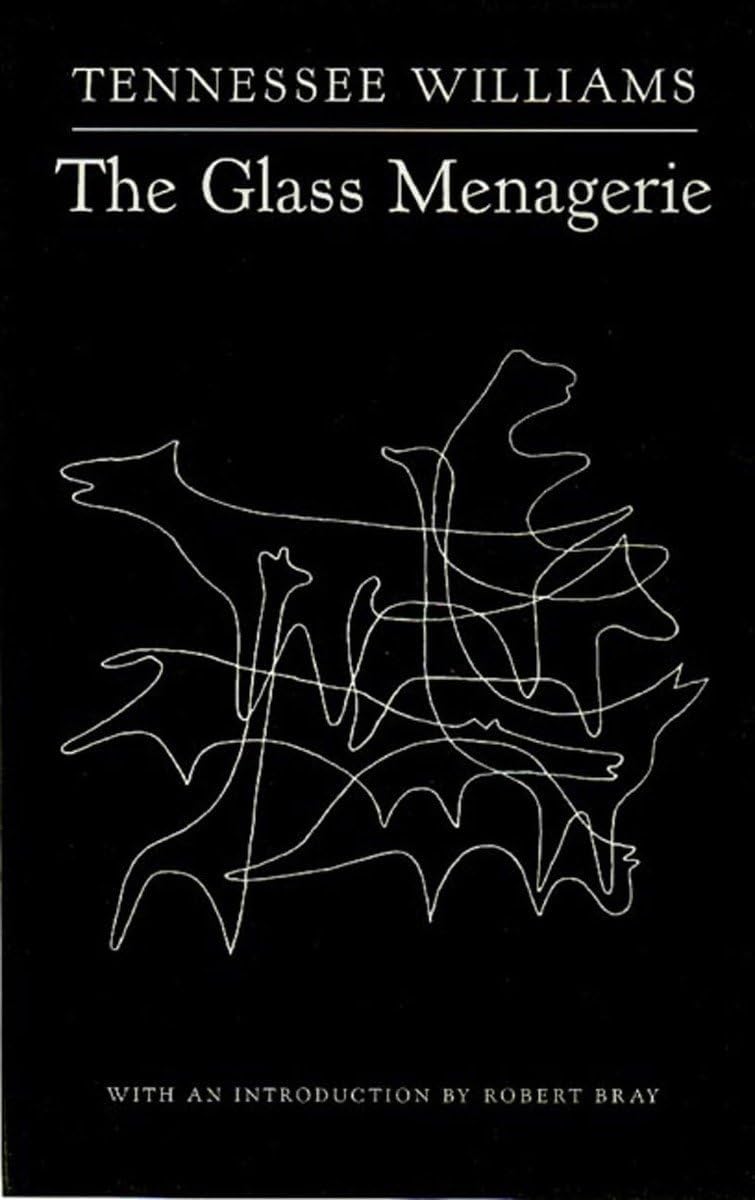
No play in the modern theatre has so captured the imagination and heart of the American public as Tennessee Williams's The Glass Menagerie . Menagerie was Williams's first popular success and launched the brilliant, if somewhat controversial, career of our pre-eminent lyric playwright. Since its premiere in Chicago in 1944, with the legendary Laurette Taylor in the role of Amanda, the play has been the bravura piece for great actresses from Jessica Tandy to Joanne Woodward, and is studied and performed in classrooms and theatres around the world. The Glass Menagerie (in the reading text the author preferred) is now available only in its New Directions Paperbook edition. A new introduction by prominent Williams scholar Robert Bray, editor of The Tennessee Williams Annual Review , reappraises the play more than half a century after it won the New York Drama Critics Circle Award: "More than fifty years after telling his story of a family whose lives form a triangle of quiet desperation, Williams's mellifluous voice still resonates deeply and universally." This edition of The Glass Menagerie also includes Williams's essay on the impact of sudden fame on a struggling writer, "The Catastrophe of Success," as well as a short section of Williams's own "Production Notes." The cover features the classic line drawing by Alvin Lustig, originally done for the 1949 New Directions edition. Review: Those gentleman callersโฆ - โฆwith honorable and not so honorable intentions. I first saw this play produced in Atlanta, in the โ70โs, and fragments of it have rolled around in my brain ever since. First and foremost there was the character of Amanda Wingfield, firmly stuck in the past, recalling her โglory daysโ as Bruce Springsteen would phrase it, in his famous song about two people in their โ20โs, recalling how their life had peaked out in high school. For Amanda Wingfield, her โglory daysโ were from her teenage years also, in the Mississippi Delta, when she had 17 gentlemen callers seeking her handโฆ and probably a bit more. She tells her daughter, Laura, that a โgirl had to be a conversationalistโ back then. All those possibilities, the 17, and always the hint of so many more, yet she makes a โpoor choiceโ who would abandon her and the family, and send a post card from Mexico that said simply: โHello, Good-bye.โ Tennessee Williams sets this play in Americaโs heartland, St. Louis. It is the late 1930โs, with news flashes involving the war in Spain, and Chamberlain. The Wingfield family is lower middle class, living in a tattered apartment, in a building with fire escapes, subsisting off the $65 a month son Tom, who works in a shoe store warehouse, brings home every month. Williams play is straightforward, and so easily understood, and packs so much pathos and heart-break into two hours of viewing, or reading, which chronicles the poverty of human existence. Reading the play after some four decades helped me recall some of the tragic circumstances of the other two members in the Wingfield family. There is daughter Laura, a โcripple,โ and even back then the mother admonishes Tom not to use that word. She has a physical challenge; that is all. But it dominates her life, and she has not been able to overcome it. Now, many years after high school, she still recalls how much noise her brace made, and knew everyone was looking at her. She is painfully, painfully shy, cannot stay in steno school because she threw up on the floor, and pretends to continue to go, but visits the parks instead. Her sole solace in life is her small collection of glass animals, including a unicorn, which mom dubs with the name of the play. I had completely forgotten โ or perhaps never realized the equal pathos in the life of son Tom. Stuck in a dead-end warehouse job, living with a mother and sister who are each in their very different worlds. The โbreadwinner,โ of sorts. He โescapesโ from his humdrum life via the movies and alcohol, and endures the nagging of his mother. But he has his own plansโฆ for a little real adventure in life, instead of living vicariously through the movies. โChamberlainโ haunts the au courant reader, with the realization that World War II is so near, and so now, on reflection, one must wonder how many bored warehouse clerks, from Americaโs heartland, found their adventure wading into the surf at Iwo Jima or Normandy? The climatic part of the play, which is what I will leave for the reader, is when Tom brings home a โgentleman callerโ for Laura. As one might suspect, Williams remains true to his theme of pathos. The author makes very effective use of a shadow screen on stage, and the New Directions version helped recall it after those four decades. When there was a flashback in the play, behind the screen, there were the shadows that captured the essence of the flashback. And when needed, certain words would be flashed on the screen. As is so often the case, the foreword and afterword provide limited value to the reader, and I think should be simply skipped. As for the play itself, it merits 5-stars, plus, and a re-read, a few years down the line. Review: Perfect Condition - I often browse for books in the stores, and when it comes to purchasing, i prefer desertcart. I like my books in perfect condition. desertcart did not disappoint. The book is high quality. I do not rate the stories themselves, that is a personal...


| Best Sellers Rank | #15,834 in Books ( See Top 100 in Books ) #10 in American Dramas & Plays #544 in Family Life Fiction (Books) |
| Customer Reviews | 4.6 out of 5 stars 1,754 Reviews |
J**I
Those gentleman callersโฆ
โฆwith honorable and not so honorable intentions. I first saw this play produced in Atlanta, in the โ70โs, and fragments of it have rolled around in my brain ever since. First and foremost there was the character of Amanda Wingfield, firmly stuck in the past, recalling her โglory daysโ as Bruce Springsteen would phrase it, in his famous song about two people in their โ20โs, recalling how their life had peaked out in high school. For Amanda Wingfield, her โglory daysโ were from her teenage years also, in the Mississippi Delta, when she had 17 gentlemen callers seeking her handโฆ and probably a bit more. She tells her daughter, Laura, that a โgirl had to be a conversationalistโ back then. All those possibilities, the 17, and always the hint of so many more, yet she makes a โpoor choiceโ who would abandon her and the family, and send a post card from Mexico that said simply: โHello, Good-bye.โ Tennessee Williams sets this play in Americaโs heartland, St. Louis. It is the late 1930โs, with news flashes involving the war in Spain, and Chamberlain. The Wingfield family is lower middle class, living in a tattered apartment, in a building with fire escapes, subsisting off the $65 a month son Tom, who works in a shoe store warehouse, brings home every month. Williams play is straightforward, and so easily understood, and packs so much pathos and heart-break into two hours of viewing, or reading, which chronicles the poverty of human existence. Reading the play after some four decades helped me recall some of the tragic circumstances of the other two members in the Wingfield family. There is daughter Laura, a โcripple,โ and even back then the mother admonishes Tom not to use that word. She has a physical challenge; that is all. But it dominates her life, and she has not been able to overcome it. Now, many years after high school, she still recalls how much noise her brace made, and knew everyone was looking at her. She is painfully, painfully shy, cannot stay in steno school because she threw up on the floor, and pretends to continue to go, but visits the parks instead. Her sole solace in life is her small collection of glass animals, including a unicorn, which mom dubs with the name of the play. I had completely forgotten โ or perhaps never realized the equal pathos in the life of son Tom. Stuck in a dead-end warehouse job, living with a mother and sister who are each in their very different worlds. The โbreadwinner,โ of sorts. He โescapesโ from his humdrum life via the movies and alcohol, and endures the nagging of his mother. But he has his own plansโฆ for a little real adventure in life, instead of living vicariously through the movies. โChamberlainโ haunts the au courant reader, with the realization that World War II is so near, and so now, on reflection, one must wonder how many bored warehouse clerks, from Americaโs heartland, found their adventure wading into the surf at Iwo Jima or Normandy? The climatic part of the play, which is what I will leave for the reader, is when Tom brings home a โgentleman callerโ for Laura. As one might suspect, Williams remains true to his theme of pathos. The author makes very effective use of a shadow screen on stage, and the New Directions version helped recall it after those four decades. When there was a flashback in the play, behind the screen, there were the shadows that captured the essence of the flashback. And when needed, certain words would be flashed on the screen. As is so often the case, the foreword and afterword provide limited value to the reader, and I think should be simply skipped. As for the play itself, it merits 5-stars, plus, and a re-read, a few years down the line.
K**R
Perfect Condition
I often browse for books in the stores, and when it comes to purchasing, i prefer Amazon. I like my books in perfect condition. Amazon did not disappoint. The book is high quality. I do not rate the stories themselves, that is a personal...
G**H
A sort of tragedy
from the perspective of a somewhat successful female in the modern age, there were so many social observations in this play. A mother who relied on her husband to be the provider, as was the absolute rule of the time, seemingly abandoned. left in the wake, a son who must now bear the burden, and begrudgingly so. No wonder women developed a reputation for being gold diggers, and no wonder men have become so mistrustful of women. Williams seems to be a bit preoccupied with this theme so I can't help but wonder about the manipulative women he may have had in his life. it was a somber read, and well written. There is an interesting back-story about how it was awarded the Pulitzer. This kindle edition included a phenomenal essay at the end written by Tennessee Williams about the effects of success and the importance of having struggle in life. I will probably reread the essay a hundred times!
M**B
poignant and profound portrayal of human relationships
Williams beautifully explains the ultimate discontent, maternal hierarchy, poverty, and living a life with disabilities in the early part of the 20th Century America. He deep dives into the human soul of his characters.
S**N
The Glass Menagerie is somber but rivetting
I am a Tennessee Williams fan. And I knew all of his plays except Glass Menagerie, so I bought it. It exquisitely describes a sad family, where the mother is hoping that her daughter would receive 'gentlemen callers'. When one came by, the daughter showed him her Glass Menagerie. But it became clear that he was not looking fo an "intended". So things go back to as they were before he came, with the glass unicorn's horn cut off. Recommended,
I**G
Excellent
Nice short play to read
M**D
Still enjoyable, after all these years!
This Tennessee Williams classic is a multifaceted look at a dysfunctional family in the late 1930โs. It delves into familial obligations, human frailty, and misguided decisions. The play is absolutely timeless, due in large part to Williamsโ magnificent job of creating a vivid scene in the readerโs mind. Most, if not all readers, can relate to varying aspects of the play, including the yearning for freedom from familial obligation, memories of our youth as we grow older, shattered dreams, and fear of stepping out of our comfort zone. Itโs most interesting to me that Williams appeals to the masses, young or old, across all generations. I remember this play having been one of the few I enjoyed reading in high school; I still enjoyed it just as much, all these years later, right along with my daughters. It is a true classic that has stood the test of time some 70+ years after it was written!
M**S
Great book.
Storyline is very interesting, I annotated a lot๐.
R**.
Teatro de Williams, valor seguro
Tennessee Williams escribiรณ muchas obras de teatro conocidas por sus adaptaciones al cine. Esta es una de ellas y, como siempre, resulta una lectura amena e interesante. Las difรญciles relaciones intrafamiliares, la tendencia a autoengaรฑarse y la axfisiante atmรณsfera creada por una persona manipuladora son algunos de los temas recurrentes en Williams que aparecen tambiรฉn en esta obra.
M**O
Great book!
Great but simple story. Interesting to read although nothing special is happening. Would recommend it !
G**Y
Recommend edition
Superb drama, one of Wlliams' best, in a highly cured edition. I definitely appreciated the whole content, including the commentaries in the introduction.
B**Y
great
great
D**T
Confusing at first but the more you read the better it gets
Trustpilot
3 weeks ago
1 month ago